Floribbean Seafood Cabbage
Floribbean Seafood Cabbage started with a viral food idea, but it ended up becoming something much more personal: an experiment in what happens when a professional chef takes inspiration from the internet and puts his own culinary perspective behind it.
A friend sent me one of those viral whole-cabbage seafood-boil videos that had been making the rounds. I watched it more than once.
Not because I wanted to copy it.
Because it made me curious.
I started asking myself a very simple question:
Can a humble head of cabbage actually become the star of a meal filled with shrimp, smoked chicken sausage, potatoes, corn, eggs and all that butter?
And once that question got into my head, I knew I had to find out.
How the Viral Cabbage Boil Sparked the Idea
One of my favorite parts about cooking is that inspiration can come from anywhere.
Sometimes it’s a family recipe. Sometimes it’s something you taste while traveling. Sometimes another chef gives you an idea. And sometimes, yes, somebody sends you a video on social media that gets your culinary wheels turning.
That’s exactly what happened here.
The viral cabbage-boil concept was the starting point. But the goal was never to recreate somebody else’s dish and simply put a Floribbean label on it.
That’s not how I approach cooking.
The question I kept coming back to was:
How would I make this my own?
That question is at the heart of Floribbean cooking for me.
I’ve always enjoyed taking familiar ingredients and looking at them through a different lens. You can see that same approach in dishes like my Floribbean Jerk Chicken Sheet Pan and Cast Iron Jerk Salmon and Creamy Grits. Both start with recognizable food, but the flavor direction takes them somewhere distinctly Floribbean.
That’s what I wanted to explore with this cabbage.
Can Cabbage Actually Steal the Show?
Let’s be honest.
Cabbage has a tough job when it’s sharing a plate with shrimp, smoked chicken sausage, baby potatoes, corn, eggs and a whole lot of butter.
The shrimp is going to get attention.
The sausage is going to get attention.
The potatoes are going to get attention.
And that butter?
That butter definitely knows how to make an entrance.
So I didn’t want the cabbage to become just a dramatic-looking container for everything else.
I wanted the cabbage itself to matter.
I wanted you to cut into it and taste something that had been intentionally developed—not something that was simply waiting underneath a pile of seafood and vegetables.
That meant thinking about the cabbage differently from the beginning.
Instead of asking, “What can I put on top of this cabbage?” I started asking, “How can I build flavor into it?”
That distinction matters.
Building Flavor From the Inside Out
One of the biggest lessons I’ve learned through more than 30 years in professional kitchens is that flavor should never be an afterthought.
If you wait until the very end to make something flavorful, you’re already fighting an uphill battle.
With this cabbage, I wanted the flavor-building process to start before the oven ever did its work.
The whole cabbage is prepared so that its structure remains intact while creating room for aromatics and seasoning to work from the inside.
The flavor profile brings together ingredients that naturally fit the Floribbean style: green seasoning, fresh thyme, scallions, garlic, lime, smoked paprika, allspice and Scotch bonnet.
The goal isn’t to make every ingredient scream.
It’s to make them work together.
That’s something I think about with all of my cooking. A good seasoning profile should have balance. You need richness, brightness, herbs, aromatics and heat, but they have to know how to share the plate.
If you’re interested in the way I use Caribbean herbs, spices, citrus and peppers to build flavor, my Caribbean Jerk Marinade is another good example of that same philosophy.
It’s not about heat for the sake of heat.
It’s about building layers.
The Floribbean Influence
The Floribbean identity of this dish isn’t about taking a traditional Caribbean recipe and changing it.
The viral cabbage-boil concept itself is a contemporary food trend, so I don’t want to pretend this is some centuries-old Caribbean preparation.
It isn’t.
What makes this Floribbean Seafood Cabbage Floribbean is the culinary lens I brought to the idea.
Fresh herbs.
Scallions.
Garlic.
Lime.
Scotch bonnet.
Coconut.
Rich butter.
Seasoned seafood.
Those are the flavors and instincts that shape the finished dish.
That’s also why I don’t consider this a “Twist or Tradition” episode. There’s no traditional cabbage-boil preparation here that I’m claiming to reinterpret. The original inspiration was a modern viral food concept, and the fun was seeing where my own culinary instincts could take it.
That’s an important distinction.
I’m not claiming I invented the cabbage-boil idea.
I’m showing you what happened when I took inspiration from it and made it my own.
The Cabbage Has to Earn Its Place
Once you start building a dish this big, every component has to earn its place.
The cabbage has to be tender.
It has to be seasoned.
It has to work with the seafood.
And it has to be able to handle the richness of the butter without becoming completely overwhelmed.
That’s why I focused so much on building flavor into the cabbage before the final assembly.
As the cabbage cooks, the aromatics and seasoning have time to work with it. The long cooking process changes the texture completely, taking the cabbage from something firm and ordinary into something tender enough to become part of the centerpiece.
And then comes the moment that makes the whole experiment worth it.
You open the foil.
The steam comes out.
You see the cabbage.
Then the knife goes in.
That’s when you finally know whether the idea worked.
The Supporting Cast: Shrimp, Sausage, Potatoes, Corn and Eggs
Of course, the cabbage isn’t alone.
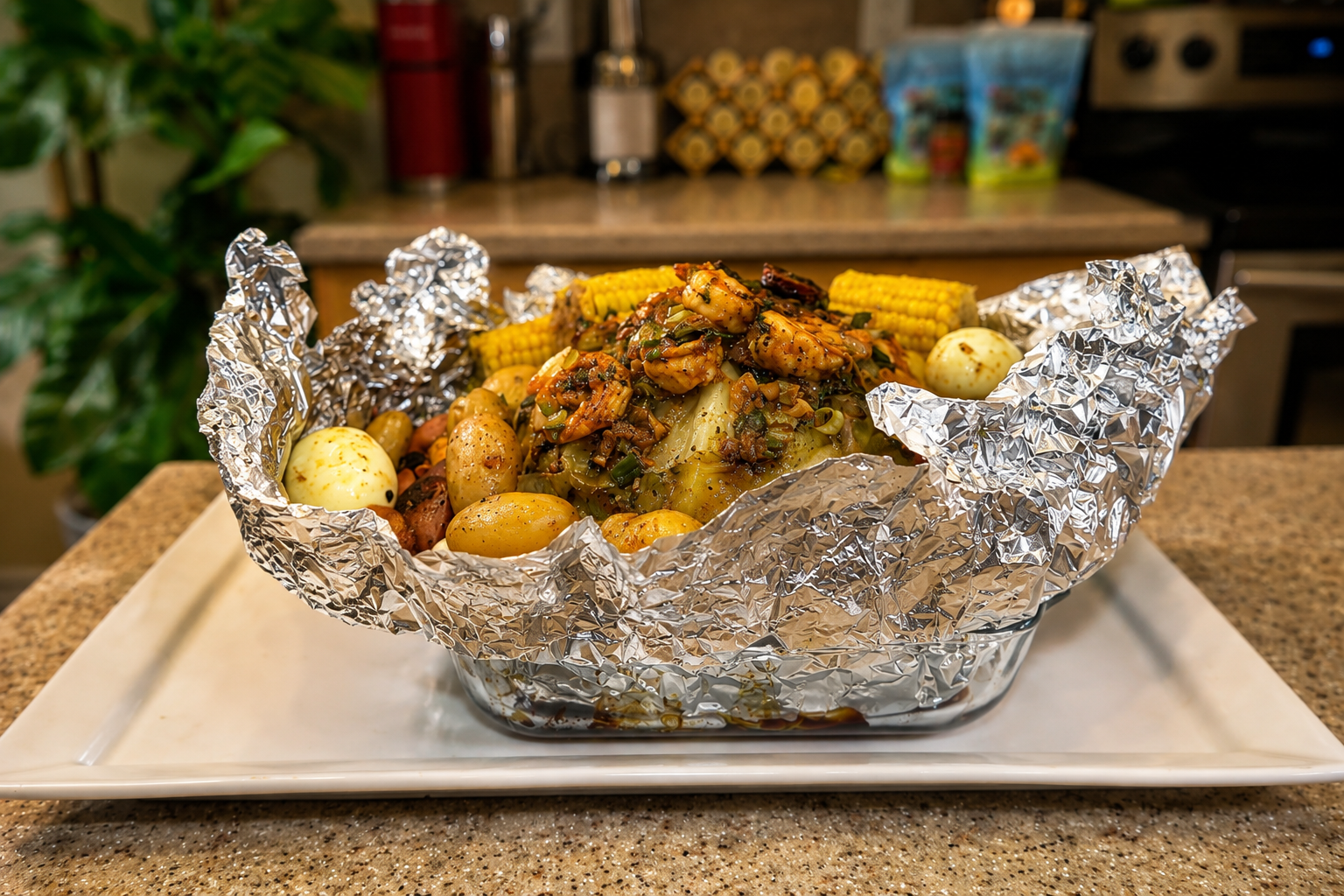
The finished dish brings together shrimp, smoked chicken sausage, baby potatoes, corn and hard-boiled eggs.
But I think of these ingredients as a supporting cast rather than a competition.
Each one contributes something different.
The sausage brings smokiness.
The potatoes bring a hearty, comforting texture.
The corn adds sweetness.
The eggs bring richness and familiarity.
And the shrimp brings that seafood-boil character that makes the whole platter feel abundant.
If you enjoy Chef Winston’s seafood-focused cooking, you can explore the Seafood Dishes section on ChefWinston.com for more of those flavors.
One of my favorites to point people toward is my Cast Iron Jerk Salmon and Creamy Grits, because it shows another side of how I approach seafood with bold Caribbean seasoning and Floribbean flavor.
The point isn’t to make every ingredient taste the same.
The point is to make all of them make sense together.
Why the Shrimp Gets Its Own Moment
Shrimp is one of those ingredients that doesn’t need much convincing.
Cook it properly and it’s naturally sweet, juicy and flavorful.
Cook it too long and you’ll know immediately.
That’s why I intentionally gave the shrimp its own moment in this dish.
The shrimp is seasoned with garlic, green seasoning, fresh thyme, lime and my Cajun Dust before being cooked separately. That allows the shrimp to develop its own flavor and texture instead of becoming lost in everything else happening on the platter.
This is another example of something I talk about often in the kitchen:
Not every ingredient needs the same cooking time.
The cabbage needs time.
The shrimp doesn’t.
The potatoes need time to become tender.
The butter needs time to develop its flavor.
Knowing those differences is part of what allows a dish with so many components to come together without becoming one big, indistinguishable pile of food.
Then Comes the Floribbean Island Butter
Now we get to what I believe is one of the biggest flavor drivers in this whole creation.
The Floribbean Island Butter.
Butter by itself is already delicious.
But when you start bringing roasted garlic, scallions, fresh thyme, Scotch bonnet, lime and coconut cream into the picture, something different happens.
Now the butter isn’t just a finishing ingredient.
It becomes part of the story.
The richness gives the dish body.
The lime brings brightness.
The Scotch bonnet provides heat.
The garlic and scallions bring aromatics.
The thyme brings herbal character.
And the coconut cream helps round everything out.
That balance is important.
A rich sauce without acidity can feel heavy.
Heat without sweetness or richness can become aggressive.
Herbs without enough fat can feel disconnected.
The Island Butter brings those elements together.
I won’t give you the exact formula here because this particular creation is being treated differently from our standard weekly recipe content. The finished Floribbean Seafood Cabbage is an original Chef Winston creation, and we’re protecting the exact recipe details rather than publishing the complete formula.
You can, however, explore more of my sauces, marinades and seasonings to see how I approach flavor-building across different dishes.
Why I Cook the Shrimp Separately
There’s another reason the shrimp gets its own stage.
Texture.
When you’re building a dish with a long-cooked centerpiece like cabbage, you don’t want your seafood sitting around cooking for the same amount of time.
That’s a recipe for overcooked shrimp.
Instead, I wanted the shrimp to stay juicy and properly cooked before it joined the final presentation.
Once the cabbage is ready and the supporting ingredients are prepared, everything comes together at the end.
That’s when the shrimp meets the butter.
That’s when the butter meets the cabbage.
And that’s when the whole dish starts to make sense.
If you’re a seafood lover looking for more of that same bold approach, the Seafood Dishes collection is a good place to continue exploring.
The Moment of Truth
After all that preparation, there is really only one thing left to do.
Open the cabbage.
This was the moment I had been building toward from the beginning.
The foil comes away.
Steam rises.
You see the cooking liquid and the tender cabbage.
Then the knife goes through.
And now we get to answer the question that started the entire episode:
Can cabbage actually hold its own against shrimp, smoked chicken sausage, potatoes, corn, eggs and all that butter?
That’s what makes cooking experiments like this so much fun.
You can have an idea.
You can have years of experience.
You can have a plan.
But until you taste it, you don’t really know.
And when I finally tasted it, the cabbage absolutely had something to say.
What I Love About Cooking
This is the bigger lesson I took from the dish.
Cooking doesn’t always require you to invent something from nothing.
Sometimes the best creative work starts with an idea that already exists.
You see something.
It catches your attention.
Then you start asking questions.
What would I change?
What flavors would I bring into it?
What techniques would I use?
What would make it feel like my food?
That’s how I approach cooking.
I don’t want to simply reproduce what I see.
I want to understand why the idea works, then figure out where my own culinary instincts can take it.
That’s the difference between copying inspiration and using inspiration.
The first one ends with somebody else’s idea.
The second one can become your own creation.
More Floribbean Inspiration From Chef Winston
If you’re enjoying this kind of cooking—the kind that takes familiar food and pushes it in a different direction—there’s plenty more to explore on ChefWinston.com.
You can browse all Chef Winston recipes for everything from seafood and Floribbean classics to brunch, sauces, marinades and more.
For another example of taking a familiar dish and putting a Floribbean spin on it, check out my Floribbean Jerk Chicken Sheet Pan.
If you want something completely different but still rooted in that same Floribbean approach, try my Floribbean Oxtail Fried Rice.
And if you’re looking for more of the Caribbean-meets-comfort-food style that defines my cooking, my Braised Oxtail with Butter Beans is another great place to start.
The common thread isn’t one particular ingredient.
It’s the approach.
Bold flavor.
Balanced seasoning.
Good technique.
And a willingness to ask, “What happens if I take this somewhere different?”
Watch the Floribbean Seafood Cabbage Episode
Reading about the idea is one thing.
Seeing that cabbage come out of the oven is another.
In the full Floribbean Seafood Cabbage episode, you’ll see the viral inspiration, the flavor-building process, the Floribbean Island Butter coming together, the seasoned shrimp hitting the pan, the final butter pour, the cabbage reveal and Chef Winston’s genuine reaction.
Most importantly, you’ll finally see whether the cabbage actually stole the show.
Watch the complete episode on Floribbean Cuisine with Chef Winston and see for yourself.
And when you’ve watched it, I want to know:
Could cabbage actually be the star of YOUR plate?
Drop your answer in the comments.
If you enjoy these Floribbean culinary experiments, subscribe to the Chef Winston YouTube community and follow along for more cooking, flavor, technique and behind-the-scenes moments.
One More Thing About This Recipe
There’s a reason you’re not seeing a traditional recipe card underneath this article.
Floribbean Seafood Cabbage is an original Chef Winston creation, and we’re being intentional about protecting some of the original recipes developed for the show.
That doesn’t mean we’re keeping the food a secret.
We’re giving you the story.
We’re showing you the ingredients and the flavor philosophy.
We’re letting you see the creative process.
But the exact formula remains protected.
That’s something we’re going to be doing more intentionally as the Chef Winston culinary collection continues to grow.
Some recipes will be published in full.
Others will become premium content, cookbook material or signature Chef Winston creations that we develop more deeply over time.
This one falls into that second category.
Because sometimes the recipe is more valuable when you protect the exact details and give people a reason to keep following the journey.
And this dish definitely has more of a journey ahead of it.
Floribbean Seafood Cabbage started with a viral idea.
It became an experiment.
Then it became a Chef Winston creation.
And that’s exactly what I love about cooking.
Inspiration can come from anywhere.
The real fun is deciding where you’re going to take it.
Bring your fork or bring your feelings.
Either way…
I’m bringing flavor.