Floribbean Coconut Pigeon Peas & Rice
Rice and peas or peas and rice? Depending on where you grew up in the Caribbean, you may already have a strong opinion about that question. And that is before we even start talking about which peas belong in the pot! I’m Chef Winston, and today I’m taking one of the Caribbean’s most familiar comfort-food combinations and giving it my own Floribbean twist. We’re talking tender pigeon peas, fluffy rice, rich coconut milk, fresh herbs, and a toasted coconut topping that brings everything together.
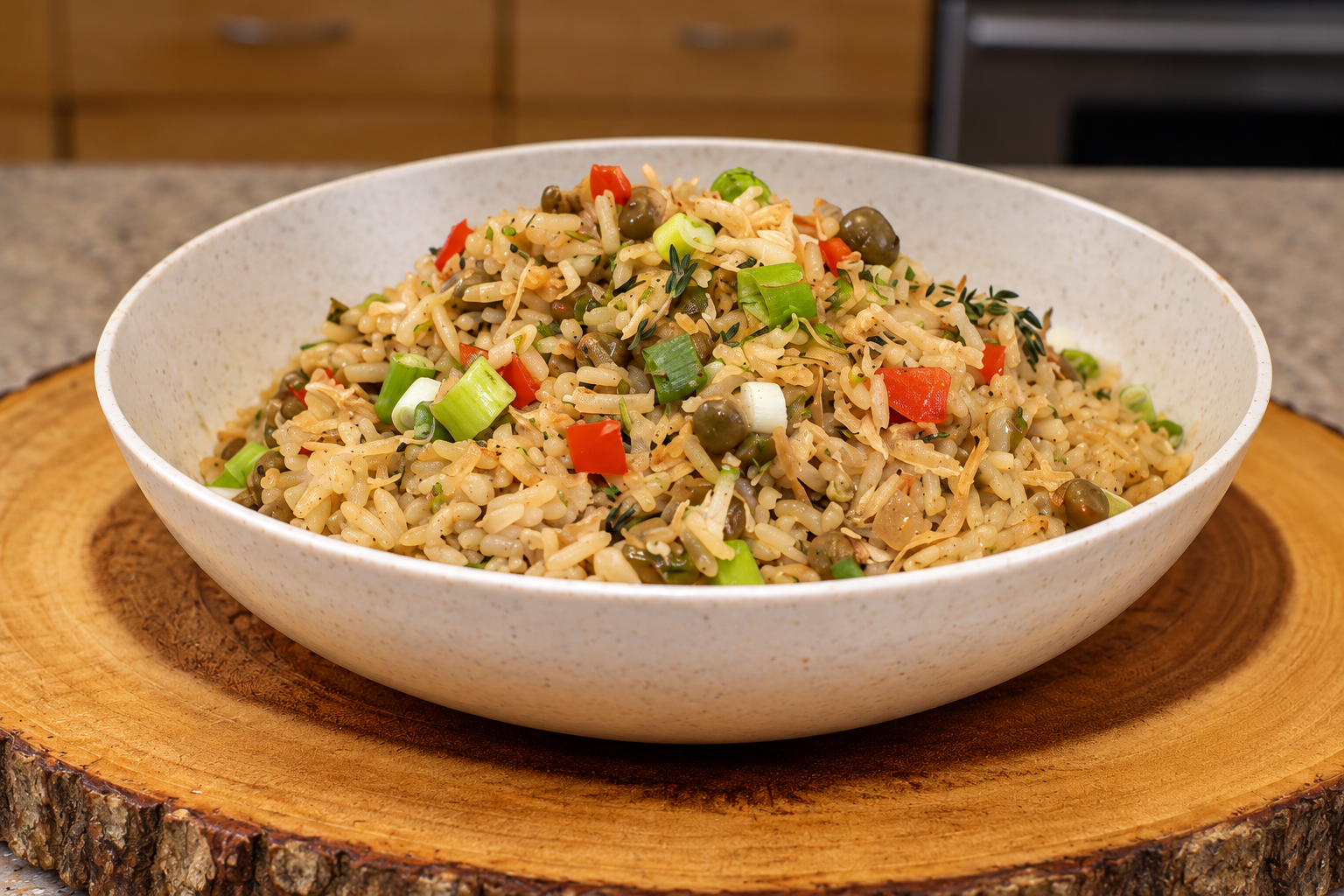
What makes this dish special is that I’m not trying to replace tradition. I’m building on it. The rice cooks in a fragrant mixture of aromatics, coconut milk, warm spices, and a whole Scotch bonnet pepper. Then, just before serving, I add a fresh mixture of toasted coconut, scallions, thyme, and lime zest. You get the familiar comfort of Caribbean rice and peas, with another layer of texture and flavor that makes this version my own.
If you enjoy bold island flavors, this pigeon peas and rice recipe deserves a place at your table. Let’s get into it.
What Makes This Floribbean Pigeon Peas and Rice Different?
I’ve always believed that good cooking starts with understanding your ingredients. You need to know what makes a dish work before you start changing things around. That is how I approach this recipe.
Traditional Caribbean rice and peas comes in different forms across the islands. Depending on the household and the region, cooks may use red kidney beans, pigeon peas, black-eyed peas, or other legumes. Some versions feature coconut milk, while others build their flavor around different combinations of herbs, spices, and seasonings.
My version uses pigeon peas and coconut milk as the foundation. I build the flavor from the bottom of the pot with onion, sweet peppers, scallions, garlic, fresh thyme, and Floribbean green seasoning. The pigeon peas join that aromatic base before the coconut milk, stock, allspice, and whole Scotch bonnet bring everything together.
But the real difference comes at the finish.
Instead of stopping when the rice is cooked, I prepare a separate topping with lightly toasted unsweetened coconut, fresh scallions, thyme, and lime zest. Once the rice has rested and been fluffed, I scatter that mixture over the top.
Think about what each part contributes. The coconut milk gives the rice a rich, rounded flavor. The pigeon peas add their own earthy character. The herbs bring fragrance, while the toasted coconut introduces a little crunch. Finally, the lime zest adds a bright citrus aroma that lifts the richness of the coconut.
That contrast is what I want you to experience.
The base stays familiar and comforting, but the topping gives the finished dish a fresher, more layered character. It is a simple way to make a well-loved Caribbean staple feel special without losing sight of what makes it work in the first place.
That is my approach to Floribbean cooking: respect the foundation, understand the flavors, and know when a small change can make a big difference.
Rice and Peas vs. Peas and Rice: Is There a Difference?
Let’s address the question that starts the argument.
Is it rice and peas or peas and rice?
The answer depends largely on where you are from and which culinary tradition you grew up with. Both names are used across the Caribbean, although particular names are associated with particular islands and communities.
In Jamaica, rice and peas is the familiar name for a dish traditionally prepared with red kidney beans, often called red peas, and commonly cooked with coconut milk, thyme, and other seasonings. Pigeon peas, also known as gungo peas, are used in some Jamaican versions as well.
In The Bahamas, peas and rice is a familiar name for a staple that can feature pigeon peas or other legumes. Other Caribbean communities have their own combinations, preparations, and naming traditions.
The dish is not identical everywhere, and that is part of what makes Caribbean food so interesting. A shared combination of rice and legumes can take on a different identity depending on the island, the available ingredients, family traditions, and the cook preparing it.
For a useful overview of these regional variations, you can read the background on rice and peas across the Caribbean. For a more focused discussion of Tobago’s culinary history and the foods that reflect its diverse influences, Trinidad and Tobago Newsday’s article on Tobago’s food history offers additional context.
So, which name do I use? You’ll hear me call it both rice and peas and peas and rice in the kitchen. I’m using pigeon peas for this particular version, and I’m bringing my own Floribbean style to the table.
I’m not here to tell anybody that their family has been calling it the wrong thing. If your grandmother called it peas and rice, that’s your tradition. If you grew up saying rice and peas, that’s yours.
What matters to me is understanding the food, respecting where it comes from, and making something delicious.
Why I Use Pigeon Peas in This Recipe
Pigeon peas are the star of this version, and they bring more to the dish than just color.
They have a distinctive, earthy flavor that works beautifully with coconut milk, garlic, thyme, allspice, and the other aromatics in the pot. Their texture also gives the rice a little more substance, so every spoonful has something going on beyond the grains themselves.
Pigeon peas are known by different names throughout the Caribbean and beyond. You may hear them called gungo peas in Jamaica or gandules in Spanish-speaking Caribbean communities. Names and preparations vary by region, so it is worth paying attention to the terminology used in the particular tradition you’re exploring.
The University of Florida’s IFAS Gardening Solutions resource on southern peas and pigeon peas provides useful background on pigeon peas as a crop and their place in Caribbean and Latin American food cultures.
For this recipe, I use canned pigeon peas. They’re convenient, readily incorporated into the aromatic base, and save you the additional preparation required for dried peas.
If you’re using canned peas, drain and rinse them before adding them to the pot. This gives you a cleaner starting point and lets the other ingredients do their work.
Fresh or dried pigeon peas can also be used in other preparations, but they may require different cooking times and preparation. Don’t assume that dried peas can simply be substituted for canned peas without adjusting the process.
I want the peas to complement the rice, not distract from it. They should be tender, flavorful, and well integrated into the dish.
Coconut Milk Is the Foundation of the Flavor
If there is one ingredient that helps define the character of this recipe, it is coconut milk.
Coconut milk gives the rice a fuller flavor and a subtle richness that works naturally with pigeon peas and Caribbean seasonings. It brings the aromatic ingredients together without requiring a heavy sauce or complicated finishing technique.
But coconut milk needs to be balanced.
Too much liquid can leave you with rice that is softer or stickier than you intended. Too little can leave the grains undercooked before the pot has had a chance to finish steaming. The amount of liquid needed also depends on the rice you use, your cookware, and how tightly your pot holds steam.
That is why I pay attention to the relationship between the rice and the total cooking liquid rather than treating the coconut milk as a separate ingredient that can simply be poured in without consideration.
The rice should cook gently and absorb the flavors around it. Once the liquid is added and the pot is covered, I resist the temptation to keep lifting the lid and stirring. Let the rice do its work.
For additional guidance on rice preparation, USA Rice’s guide to cooking rice explains why the liquid-to-rice ratio, cooking time, and covered cooking method matter.
One more thing: use unsweetened coconut milk. This is a savory dish, and I want the coconut to contribute richness and aroma rather than an unnecessary sweetness.
The toasted coconut topping reinforces that flavor, but it does so in a completely different way. Instead of bringing richness through liquid, it adds a dry, lightly toasted character and a pleasant contrast to the tender rice.
That combination is what makes the coconut work so well here.
Building Flavor Before the Rice Goes Into the Pot
One of the biggest mistakes you can make with a one-pot rice dish is treating the cooking liquid as the only source of flavor.
I want flavor in the rice itself, not just around it.
That begins with the aromatic base. Onion and sweet peppers provide the starting point, while scallions, garlic, fresh thyme, and Floribbean green seasoning build a more layered foundation.
I sauté the aromatics first, giving them time to soften and release their fragrance. This creates a flavorful base before the rice and cooking liquid enter the picture.
Garlic needs a little attention here. I want it fragrant, not burnt. Burnt garlic can introduce a harsh flavor that distracts from the other ingredients.
Fresh thyme brings an earthy, herbal note that works particularly well with coconut milk and allspice. Scallions contribute a milder onion character, while the peppers provide sweetness and depth.
The green seasoning brings another layer of flavor to the pot. If you want to understand how I approach this seasoning in my own kitchen, take a look at my Floribbean Green Seasoning recipe. It is a useful starting point for exploring the aromatic foundation I use in Floribbean cooking.
I also like to toast the rice briefly in the aromatic mixture before adding the remaining ingredients. This helps coat the grains in the seasoned base and gives me another opportunity to build flavor before the rice begins absorbing the liquid.
It is a small step, but small steps matter when you’re trying to make a straightforward dish taste memorable.
Why I Keep the Scotch Bonnet Whole
Let’s talk about the Scotch bonnet.
This pepper is closely associated with Caribbean cooking, and its fruity aroma can bring a distinctive character to a dish. But there is a difference between using a pepper to flavor a pot and deliberately making that pot extremely hot.
For this recipe, I keep the Scotch bonnet whole.
That is an intentional choice. I want the pepper’s aroma and character to work alongside the coconut milk, thyme, allspice, and other seasonings without allowing its heat to dominate every bite.
I don’t cut it open or mash it into the rice. I place it in the pot whole and remove it before serving.
And please, handle it with care. Scotch bonnet peppers can be very hot, and their juices can irritate your skin and eyes. Wash your hands thoroughly after handling them, and avoid touching your face.
If you prefer a milder dish, keeping the pepper whole is a useful starting point, but it does not guarantee that the rice will have no heat. Peppers vary in intensity, and a whole pepper can still release some heat during cooking.
If you’re especially sensitive to spice, you can omit it and adjust the seasoning to suit your household.
The goal is balance. I want you to taste the coconut, the herbs, the peas, and the seasoning. The Scotch bonnet should contribute to that experience rather than take it over.
The Floribbean Twist: Toasted Coconut, Scallions, Thyme and Lime
Now we get to the part that makes this recipe distinctly mine.
Once the rice is cooked and has had time to rest, I finish it with a mixture of toasted unsweetened coconut, thinly sliced scallions, fresh thyme, and lime zest.
This is not just a garnish for appearance. Every component has a purpose.
The toasted coconut adds texture and a deeper coconut aroma. The scallions provide a fresh, savory note. Thyme connects the topping to the herbs already used in the rice, while lime zest introduces a bright citrus fragrance.
The result is a contrast between the soft, tender rice and the lightly crisp coconut topping.
Why I toast the coconut first
Raw coconut flakes and toasted coconut flakes do not deliver exactly the same flavor.
Gentle toasting gives the coconut a more pronounced aroma and a lightly nutty character. It also adds texture, which is important because the rice itself should be tender rather than crunchy.
I toast the coconut in a dry skillet, keeping a close eye on it. Coconut flakes can go from lightly golden to burnt quickly, especially when they are thin.
Once the coconut is toasted, I let it cool slightly before combining it with the scallions, thyme, and lime zest.
This gives the herbs and citrus a chance to remain fresh and fragrant rather than being cooked down with the coconut.
Why lime zest matters
Lime zest contains aromatic oils that give the topping its fresh citrus character. I use the zest rather than relying only on lime juice because I want that fragrance to sit right on top of the rice.
A little fresh lime juice can also be added to the finished rice if you want extra brightness, but I treat that as an optional finishing touch.
The distinction matters: the zest gives you a concentrated citrus aroma, while the juice contributes acidity and tang.
Together, they can help balance the richness of the coconut without overwhelming it.
When to add the topping
Add the toasted coconut mixture just before serving.
If you mix it into the pot too early, the coconut can lose some of its texture as it sits against the moist rice. Keeping it on top preserves the contrast that makes the finish special.
When I serve this dish, I want people to notice the fragrance as soon as the plate reaches the table. You get the aroma of coconut, the freshness of the herbs, and that little hit of lime before you even take the first bite.
That’s the Floribbean twist I’m after.
How to Get Tender, Fluffy Pigeon Peas and Rice
Even a well-seasoned rice dish can disappoint if the grains are overcooked, undercooked, or sitting in too much liquid.
The technique here is straightforward, but it rewards a little attention.
First, rinse and drain the rice before cooking. This helps remove excess surface starch and gives you a cleaner starting point.
Next, take the time to soften the aromatics before introducing the rice. You want the onion, peppers, scallions, garlic, and thyme to contribute their flavor to the cooking base rather than simply simmering in the liquid.
When the rice goes in, toast it briefly in that aromatic mixture. Then add the pigeon peas, coconut milk, stock, allspice, bay leaf, and whole Scotch bonnet.
The amount of stock should be adjusted to suit the rice and the total liquid already in the pot. Coconut milk counts toward that total. It is important not to treat the stock as though it were the only cooking liquid.
Once the pot reaches a gentle boil, reduce the heat, cover it, and let the rice cook until tender and the liquid has been absorbed.
Avoid repeatedly lifting the lid. Every time you release steam, you change the cooking environment inside the pot.
Once the rice is cooked, remove it from the heat and allow it to rest, covered, for about 10 minutes. This resting period gives the moisture an opportunity to distribute more evenly through the rice.
After resting, remove the bay leaf and Scotch bonnet, then fluff the rice gently with a fork.
You want to separate the grains without crushing them or turning the whole pot into a sticky mass.
Finally, add the toasted coconut topping and serve.
My chef’s tip: Don’t rush the resting period
I know it can be tempting to serve rice the moment the heat goes off. But giving it a few minutes to rest makes a difference to the final texture.
The rice has been absorbing liquid and cooking under steam. Resting allows that process to settle before you disturb the grains.
I also avoid vigorous stirring at this stage. Use a fork and lift the rice gently.
Remember, the goal is tender rice with a pleasant, fluffy texture, not a compacted mixture of grains and peas.
If your rice is still firm after the initial cooking time, don’t assume that adding a large amount of extra liquid is the answer. Check the texture and remaining moisture first. If more cooking is needed, a little additional liquid and a few more minutes over low heat may be appropriate, depending on the condition of the rice.
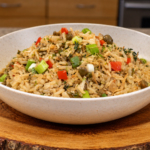
Floribbean Pigeon Peas & Rice
Ingredients
- 2 cups long-grain white rice rinsed and drained
- 1 15- oz can pigeon peas drained and rinsed
- 1 tablespoon olive oil
- 1/2 cup finely diced yellow onion
- 1/3 cup finely diced red bell pepper
- 1/3 cup finely diced green bell pepper
- 3 scallions sliced
- 3 garlic cloves minced
- 1 tablespoon fresh thyme leaves
- 1 teaspoon ground allspice
- 1 whole Scotch bonnet pepper
- 1 13.5- oz can unsweetened coconut milk
- approximately 1 1/2 cups chicken or vegetable stock
- 1 bay leaf
- Kosher salt and black pepper to taste
- 1 teaspoon fresh lime juice optional at finish
- Toasted Coconut-Scallion Finish
- 1/3 cup unsweetened coconut flakes
- 2 scallions very thinly sliced
- 1 teaspoon fresh thyme leaves
- Zest of 1/2 lime
Instructions
- Heat the olive oil in a heavy-bottomed pot over medium heat. Add onion and peppers and sauté until softened. Add scallion, garlic and thyme and cook until fragrant.
- Add the rinsed rice and toast briefly in the aromatic mixture.
- Stir in the pigeon peas, allspice, coconut milk and enough stock to provide the proper liquid ratio for the rice you're using. Add the bay leaf and whole Scotch bonnet.
- Season, bring to a gentle boil, reduce to low, cover and cook until the rice is tender and the liquid has been absorbed.
- Remove from heat and allow the rice to rest, covered, for approximately 10 minutes.
- Meanwhile, lightly toast the coconut in a dry skillet. Cool slightly and combine with scallion, thyme and lime zest.
- Remove the Scotch bonnet and bay leaf. Fluff the rice gently.
- Finish with a small amount of fresh lime juice if desired and scatter the toasted coconut mixture over the finished rice immediately before serving.