Floribbean Green Seasoning
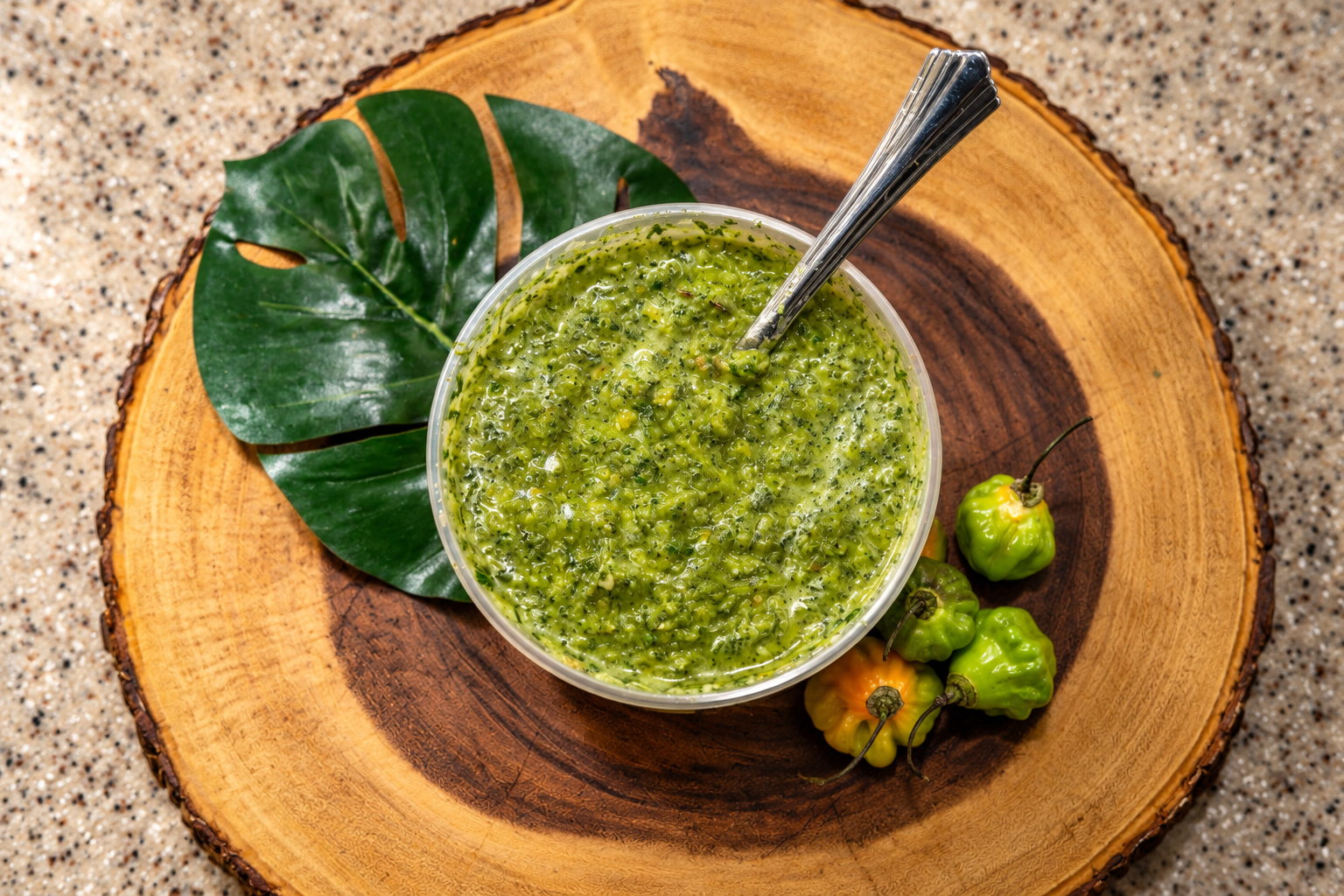
Floribbean Green Seasoning is my take on a flavor-building tradition I love across Caribbean cooking: starting with fresh herbs, aromatics, peppers, and seasoning before the food ever hits the fire.
I love a seasoning that does more than simply add salt or heat. A good seasoning base gives you a head start. It gets into the food, builds layers of flavor, and makes whatever you’re cooking taste like you’ve been working on it all day.
That’s exactly what I wanted this Floribbean Green Seasoning to do.
I start with a Caribbean foundation of fresh herbs, garlic, peppers, scallions, and aromatics. Then I bring in something that speaks to the Floribbean side of my cooking: lime, lime zest, and orange.
The result is fresh, herb-forward, citrusy, and just spicy enough to keep things interesting.
Caribbean soul. Florida brightness. One jar.
What Is Floribbean Green Seasoning?
Green seasoning is a fresh aromatic mixture used as a flavor foundation in many Caribbean kitchens. The exact ingredients aren’t the same everywhere, and that’s part of what makes it so interesting.
Depending on the island, household, and cook, you may find combinations of fresh herbs, scallions, garlic, peppers, onions, thyme, and other aromatics.
When I make my version, I take that Caribbean flavor foundation and give it my own Floribbean direction.
I use fresh parsley, cilantro, recao, scallions, thyme, oregano, onion, garlic, green pepper, seasoning peppers, and Scotch bonnet. Then I bring in fresh lime juice, lime zest, orange juice, and a little white vinegar.
The lime gives me acidity. The zest brings those fragrant citrus oils. The orange adds a subtle brightness and rounds everything out without turning the seasoning into an orange marinade.
That balance is what I was after.
Floribbean Green Seasoning: Caribbean Soul, Florida Brightness
The idea behind this seasoning came together while I was thinking about something I find fascinating about Caribbean food.
Different cultures can develop their own approaches to solving a similar cooking problem:
How do you build deep flavor before the main ingredient ever reaches the heat?
That’s where the conversation around epis, sofrito, and green seasoning gets interesting.
They aren’t the same thing, and I don’t treat them as interchangeable.
But they all demonstrate something I think Caribbean cooks understand extremely well:
Build the flavor foundation first.
If you’ve ever wondered about the difference between these seasoning traditions, I go deeper into that comparison in my Epis vs. Sofrito vs. Green Seasoning article.
Epis, Sofrito, and Green Seasoning Are Not the Same
If you’ve ever looked at epis, sofrito, and green seasoning and thought, “Aren’t these basically the same thing?” I understand why.
They can all contain ingredients such as herbs, garlic, peppers, onions, and other aromatics. They can all be used to start building flavor in a dish.
But their cultural identities, ingredients, colors, textures, and preparations can be very different.
A version of Haitian epis, for example, may include herbs, garlic, scallions, peppers, and thyme. Depending on the household and the cook, other ingredients may also come into the mix.
That’s why I don’t describe one particular recipe as the definitive Haitian epis. There can be plenty of variation from one kitchen to another.
Sofrito is another flavor-building tradition with its own cultural identity and variations.
Puerto Rican sofrito, for example, is used as an aromatic foundation in dishes such as arroz con gandules and asopao. A Puerto Rican tourism resource’s traditional sofrito example includes green and red bell peppers, garlic, onion, cilantro, recao or culantro, and olive oil. Learn more about traditional Puerto Rican sofrito.
The exact ingredients and preparation can vary, which is important to remember when talking about a food tradition that exists across households.
Then you have green seasoning, which is commonly used across many English-speaking Caribbean communities, including Trinidad and Tobago, Guyana, Jamaica, Barbados, Grenada, Saint Lucia, and Dominica.
The ingredients can change from island to island and household to household.
So no, I don’t look at epis, sofrito, and green seasoning as three names for the exact same thing.
I look at them as different culinary traditions that demonstrate a similar flavor-building philosophy.
And that’s where my Floribbean version comes in.
What Makes My Green Seasoning Floribbean?
For me, it comes down to the citrus.
The Caribbean foundation is already there: fresh herbs, recao, scallions, thyme, garlic, peppers, onion, and Scotch bonnet.
But I wanted the citrus to be part of the identity rather than an afterthought.
So I use lime juice, lime zest, and fresh orange juice.
The lime juice gives the seasoning that bright acidity I want. The zest is especially important because it gives me concentrated citrus aroma without adding more liquid.
And then there’s the orange.
I’m not trying to make this taste like orange juice.
I use just enough to add another layer of citrus and a little natural sweetness that works with the lime and fresh herbs.
That’s the Floribbean balance I’m looking for.
You get that unmistakable Caribbean herb-and-pepper foundation, but there’s a brightness that reminds me of Florida.
How I Make Floribbean Green Seasoning
The process is simple, but there are a couple of details that matter.
First, I wash and thoroughly dry my herbs and produce. I roughly chop the larger vegetables so the food processor doesn’t have to fight through big pieces.
I start by adding the parsley, cilantro, recao, scallions, thyme, oregano, onion, garlic, green bell pepper, seasoning peppers, and Scotch bonnet to the food processor.
Then I add the lime zest, lime juice, orange juice, and white vinegar.
At this point, I pulse everything until the herbs and aromatics begin to break down.
I don’t want to turn this into a completely smooth green paste.
I like seeing those little flecks of herbs and aromatics throughout the seasoning. That texture tells me I haven’t taken it too far.
With the processor running, I slowly stream in the olive oil.
Then I add the kosher salt and black pepper and give everything a few more pulses.
I taste it before I call it finished.
What I’m looking for is fresh herbs first, followed by garlic and citrus, with the Scotch bonnet coming through with a gentle lingering heat.
If it needs more brightness, I’ll adjust the citrus. If it needs more seasoning, I’ll adjust the salt. And if I want more heat, I’ll add a little more Scotch bonnet.
That’s one of the advantages of making your own seasoning base: you can make it taste like you.
My Biggest Tip: Don’t Over-Purée It
This is probably the biggest thing I want you to remember when making this.
Don’t puree your green seasoning until it’s completely smooth.
I want some texture.
When I pulse the ingredients instead of running the food processor endlessly, I can still see the herbs and aromatics throughout the mixture.
That gives the seasoning character, and it also keeps it from feeling like a completely uniform sauce.
You want it cohesive and spoonable, but you don’t need to turn it into baby food.
How I Use Green Seasoning
This is where the jar really earns its place in my refrigerator.
I use green seasoning as a starting point for so many different dishes.
Chicken is one of my favorite applications. I can coat chicken thighs generously with the seasoning, let them marinate, and then roast or grill them until they’re beautifully cooked and browned.
For marinades, I generally start with about 2 tablespoons of green seasoning per pound of protein, then adjust depending on what I’m cooking and how much flavor I want.
It’s also excellent with:
- Fish
- Shrimp
- Pork
- Steak
- Roasted vegetables
- Rice
- Soups
- Stews
And you don’t have to think of it only as a marinade.
I can use a spoonful as part of the flavor base for a pot of rice. I can add it to a soup or stew. I can use it to season vegetables before roasting them.
That’s why I like having a jar ready to go.
It isn’t really about the jar.
The jar is the shortcut to building flavor.
Why I Love Making Green Seasoning From Scratch
There are plenty of times when convenience wins.
But fresh green seasoning is one of those things I genuinely enjoy making because the difference starts with the ingredients.
When I put fresh herbs, garlic, peppers, citrus, and aromatics into the food processor, the kitchen immediately smells different.
You know you’re building something.
And because I control every ingredient, I can adjust the heat, acidity, salt, and citrus to fit exactly what I’m cooking.
If I’m making something delicate, I can go lighter.
If I’m seasoning chicken for the grill, I can be more generous.
If I know I’m cooking for people who don’t want a lot of heat, I can start conservatively with the Scotch bonnet.
That’s the beauty of a homemade seasoning base.
How Much Green Seasoning Should I Use?
There isn’t one magic measurement for every dish because I use green seasoning differently depending on what I’m cooking.
For a marinade, I start with about 2 tablespoons per pound of protein.
For a pot of rice, soup, or stew, I’ll usually start smaller and build the flavor as I go.
The important thing is to remember that this is a concentrated flavor base. You don’t necessarily need half the jar to make an impact.
Start with less.
Taste.
Then add more if you need it.
That’s how I approach seasoning in general. You can always build flavor, but once you’ve gone too far, it’s much harder to pull it back.
How to Store Floribbean Green Seasoning
Once I make the seasoning, I transfer it into a clean, airtight jar and refrigerate it promptly.
Because this is made with fresh herbs and aromatics, I prefer using it within several days for the best freshness and flavor.
If I’ve made more than I need immediately, I can also freeze it in small portions.
That’s especially useful if I want to have green seasoning ready for future meals without making a fresh batch every time.
I like portioning it according to how I’ll actually use it, so I can pull out only what I need.
My Tips for Making the Best Floribbean Green Seasoning
Dry your herbs well. Extra water can change the texture of the seasoning.
Don’t go crazy with the orange. I want the orange to support the lime and herbs, not overpower them.
Don’t skip the lime zest. The juice gives acidity, but the zest brings another level of citrus aroma.
Start conservatively with Scotch bonnet. You can always add more heat. It’s much harder to take it away.
Don’t over-process. Leave some visible herb and aromatic flecks.
Taste before storing. This is your seasoning base, so make sure the balance is where you want it before it goes into the refrigerator.
What Can I Make With Floribbean Green Seasoning?
Once you have a jar in the refrigerator, the possibilities open up.
Use it to marinate chicken before grilling or roasting.
Toss shrimp or fish with it before cooking.
Rub it onto pork.
Season vegetables before they go into the oven.
Stir it into rice.
Add a spoonful to soup or stew as you’re building the base.
You can even make it part of your meal-prep routine. Prepare one batch, portion it, and you’ve already done some of the flavor work for several meals.
That’s what I love about a good seasoning base.
It doesn’t lock you into one recipe.
It gives you somewhere to start.
A Flavor Foundation You Can Make Your Own
What I love most about green seasoning is that it represents more than a list of ingredients.
Across Caribbean kitchens, cooks have developed different ways of building flavor before the main cooking even begins.
Epis has its own cultural identity.
Sofrito has its own traditions and variations.
Green seasoning has its own place across Caribbean cooking.
And my Floribbean version is my way of bringing that flavor-building idea into my own culinary point of view.
I keep the Caribbean foundation strong, then bring in lime, lime zest, and orange for that extra brightness.
That’s what makes it Floribbean to me.
So make a batch, keep it cold, and start experimenting.
Put it on chicken. Try it with seafood. Stir some into rice. Add it to vegetables. Build a soup or stew around it.
Don’t be afraid to make adjustments until it tastes right for your kitchen.
Build the flavor first. Then cook.
That’s the whole idea.
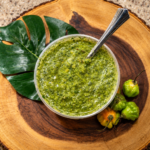
Chef Winston's Floribbean Green Seasoning
Ingredients
Fresh Herbs & Aromatics
- 1 packed cup fresh flat-leaf parsley
- 1 packed cup fresh cilantro
- 8 culantro/recao leaves
- 8 scallions roughly chopped
- 12 sprigs fresh thyme leaves removed
- 2 tablespoons fresh oregano leaves
- 1 medium yellow onion roughly chopped
- 10 garlic cloves
- 1 green bell pepper seeded and chopped
- 6 seasoning peppers or ají dulce peppers
- 1/4 –1/2 Scotch bonnet pepper or to taste
Floribbean Citrus
- Zest of 1 lime
- Juice of 2 limes
- 2 tablespoons freshly squeezed orange juice
- 1 tablespoon white vinegar
Finish
- 1/2 cup olive oil
- 1 1/2 teaspoons kosher salt
- 1 teaspoon freshly ground black pepper
Instructions
Prepare everything.
- Wash and thoroughly dry the herbs and produce. Roughly chop the larger vegetables.
Build the Caribbean foundation.
- Add parsley, cilantro, recao, scallions, thyme, oregano, onion, garlic, bell pepper, seasoning peppers, and Scotch bonnet to the food processor.
Bring in the Floribbean brightness.
- Add lime zest, lime juice, orange juice, and vinegar.
Process.
- Pulse several times until the herbs and aromatics begin breaking down.
Finish with olive oil.
- With the processor running, slowly stream in the olive oil.
Season.
- Add kosher salt and black pepper.
Check the texture.
- Continue pulsing only until the seasoning is cohesive and spoonable. Leave visible flecks of herbs and peppers.
Taste.
- You're looking for fresh herbs first, followed by garlic and citrus, with the Scotch bonnet lingering gently in the background.
- Adjust salt, citrus, or heat as needed.
Video
Notes
Chef Winston's Notes
The lime zest is important. Juice provides acidity, but the zest brings aromatic citrus oils without adding additional liquid.The orange should remain subtle. We're not making orange marinade—the goal is enough sweetness and citrus character to round out the lime and herbs.
And Scotch bonnet is here for both flavor and heat. Start conservatively. You can always add more.
How to Use It
Try it with:Grilled Chicken • Roast Chicken • Fish • Shrimp • Pork • Steak • Vegetables • Rice • Soups • Stews For marinades, start with approximately 2 tablespoons per pound of protein and adjust according to the dish.
Chef Winston Quick Application
Coat chicken thighs generously with Floribbean Green Seasoning. Refrigerate to marinate, then roast or grill until properly cooked and beautifully browned.Storage
Transfer to a clean airtight jar and refrigerate promptly. Use within several days for peak freshness, or freeze in small portions for future meals. Chef Winston Says“Build the flavor first. Then cook.”