Green Plantain vs. Ripe Plantain: Different Uses for the Same Fruit
Green plantain vs. ripe plantain—the difference is more than the color of the skin. I can take the same fruit at two different stages of ripeness and turn it into completely different foods. One is firm, starchy, and suited to savory preparations. The other becomes softer, sweeter, and ready to caramelize in a hot pan.
That’s what I want to explore with you in this episode: how ripeness changes plantain, and how the way I cut and cook it changes the final result even more.
When you look at a green plantain beside a heavily ripened one, you might think they’re two different ingredients. But they’re the same fruit at different stages. Once you understand what those stages mean in the kitchen, you have more control over what you’re cooking.
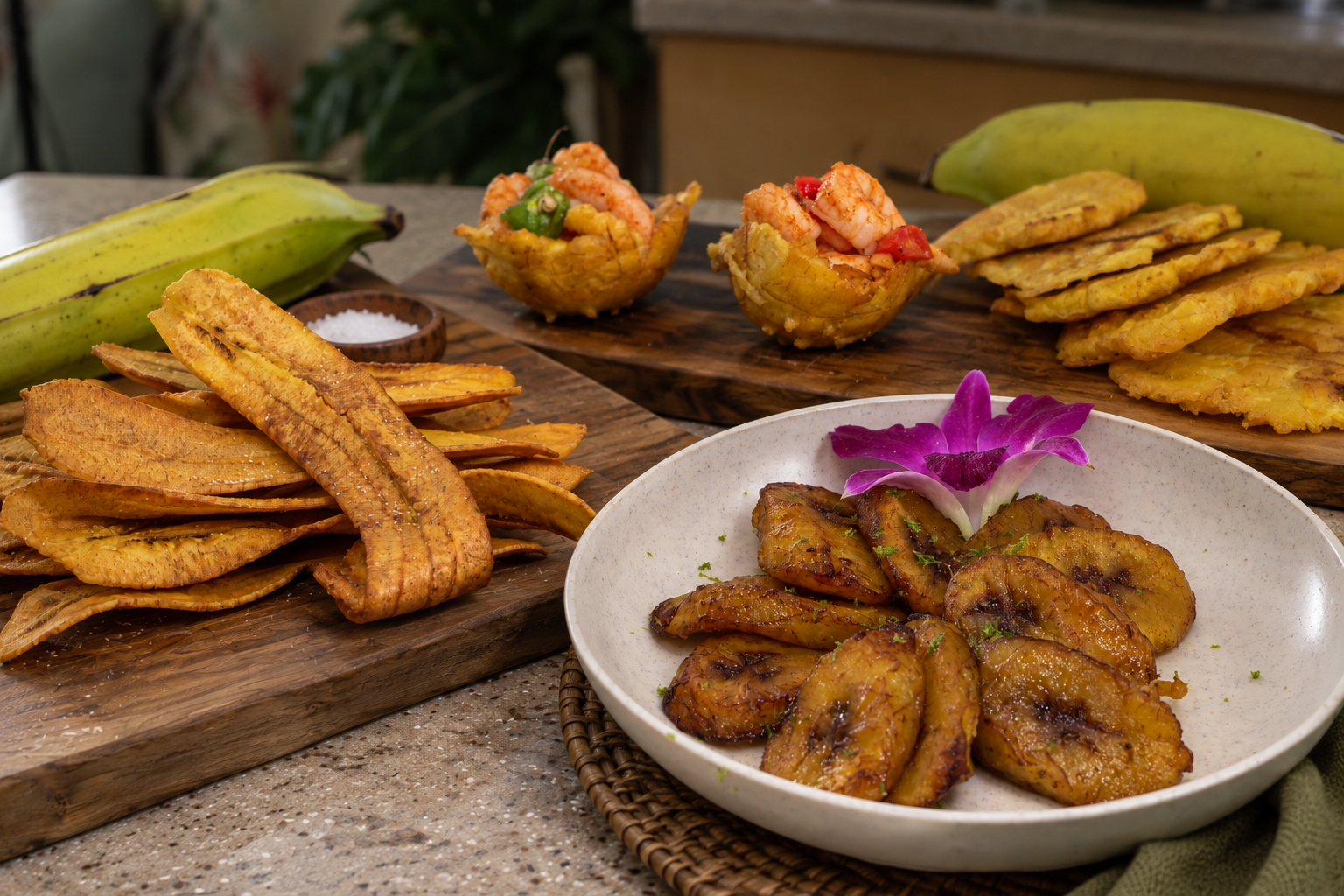
I’m taking you through four ways to use plantain: crisp green plantain chips, golden tostones, sweet fried ripe plantains, and green plantain cups. The point isn’t to turn this into four separate recipe tutorials. I want you to see the bigger picture: one fruit, different stages, different techniques, and very different eating experiences.
Green Plantain vs. Ripe Plantain: What Changes?
Let’s start with the green plantain. When it’s green, the flesh is firm and starchy, and it isn’t particularly sweet. I like to think of it more like a potato than a banana when I’m deciding how to cook it. You can boil it, mash it, fry it, smash it, or slice it thin for chips.
As the plantain ripens, its starches increasingly convert into sugars. The flesh softens, and the flavor becomes sweeter. The skin often moves from green to yellow and then develops dark spots as ripening continues. A ripe plantain can have a very dark, even black-looking skin and still be useful for cooking, as long as the flesh is in the condition you want.
For the fried sweet plantains I’m making here, I want a ripe plantain that has softened and sweetened but is still firm enough to handle and slice. If it has become very mushy, it may not hold its shape the way I want in the pan.
Here’s the kitchen lesson: don’t just look at a plantain and ask, “How do I cook this?” Ask yourself what stage it’s at and what result you want. Then choose the cut and cooking technique to match.
1. Green Plantain Chips: Thin Slices, Crisp Results
When I want a crisp, crunchy plantain chip, I start with a green plantain. Its firm, starchy flesh is well suited to being sliced thin and fried.
First, I peel the plantain. The skin can be stubborn, so I use the tip of a knife to start a cut in the peel and then work it away from the flesh. A spoon can help ease the peel off without taking too much of the plantain with it.
For the chips, I use a mandoline to make long, thin slices. This is one of those moments when consistency matters: slices that are close to the same thickness are more likely to cook at a similar rate. A mandoline is very sharp, so I use its guard or a cut-resistant glove and keep my fingers clear of the blade.
I fry the thin slices in hot oil until they turn golden and crisp, then season them with a little salt. The goal is a chip with a satisfying crunch, not a soft or chewy slice.
Chef Winston’s tip: Keep an eye on the chips as they fry. Thin slices can change color quickly, so watch the oil and the plantain rather than walking away and waiting for a timer. Let the finished chips drain, then season while they’re still warm.
The simple principle here is thin slice + fry = chips. The green plantain gives me a firm starting point, and the thin cut helps create that crisp texture.
I like chips as a snack on their own, but they can also be served with a dip such as guacamole or salsa. That’s an easy way to bring a little contrast to the plate: crunchy, salty plantain with a cool or fresh accompaniment.
2. Tostones: The Cut and the Smash Make the Difference
Now let’s stay with green plantain, but change the technique. I can use the same starchy fruit to make tostones, and the result is nothing like a thin, crisp chip.
For tostones, I cut the peeled green plantain into thicker pieces. I fry those pieces first, then take them out and smash them. After smashing, I return them to the hot oil for a second fry.
That two-stage process is what gives tostones their distinctive texture. The first fry starts cooking the plantain. Smashing increases the surface area and changes the shape. The second fry helps create a crisp exterior while the inside stays substantial.
Chef Winston’s tip: Don’t confuse tostones with chips just because both begin with green plantain and hot oil. The thickness of the cut and the smash-and-refry technique are what set them apart. Thin slices are built for a chip; thicker pieces that are fried, smashed, and fried again become tostones.
If you’ve only ever eaten plantain chips, tostones are a good reminder that the ingredient doesn’t have to change for the final dish to feel completely different. Sometimes the transformation comes from how you handle it.
3. Fried Ripe Plantains: Sweet, Soft, and Caramelized
Now we move from green to ripe. This is where the flavor and texture shift in a very noticeable way.
For this preparation, I use a ripe plantain that has softened and developed sweetness but still has enough firmness to slice. I cut it on the bias, giving the pieces a longer surface area to brown in the pan.
When ripe plantain hits hot oil, its natural sugars begin to caramelize. I’m looking for browned, darker edges and a soft, creamy center. It’s a different experience from green plantain chips or tostones: instead of leaning into a starchy, savory bite, I’m bringing out the plantain’s sweetness.
And then I give it a little Floribbean finish.
Once the plantains are fried, I add fresh lemon zest and flaky sea salt. The lemon brings a bright citrus aroma, while the salt gives a small contrast to the sweetness. I’m not trying to cover up the flavor of the plantain. I’m adding a finishing touch that helps it come alive.
As I say in the episode, “I’m not trying to change the plantain. I’m just waking it up.”
Chef Winston’s tip: Choose a ripe plantain that’s sweet and softening but not so mushy that it falls apart when you slice it. And keep the finish simple. A little lemon zest and flaky salt are enough to add a fresh note without taking over the dish.
This is one of my favorite things about cooking with familiar ingredients: you don’t always need a complicated list of additions to make something feel special. Sometimes the right stage of ripeness and a thoughtful finish are all you need.
4. Green Plantain Cups: A Savory Way to Serve the Fruit
There’s another useful transformation you can make with green plantain: turn it into cups.
In the episode, I use green plantain to form little cups and fill them with garlic shrimp, peppers, and onions. The plantain becomes more than a side dish—it becomes part of the serving vessel, holding a savory filling in each bite.
The idea is flexible. Depending on what you’re cooking and what you have available, you could consider other fillings, such as beef, pork, or saltfish. The key is that the green plantain starts out firm enough to be shaped and used in this way.
What I do want you to take away is that green plantain isn’t limited to chips or tostones. Its firm, starchy structure gives you other possibilities, too. You can mash it, shape it, and build a dish around it.
How to Think About Plantain Before You Cook
When you’re standing in the kitchen with a plantain, the first thing to consider is its ripeness.
-
Green and firm: Expect a starchy, less-sweet ingredient. It can be boiled, mashed, sliced thin for chips, or cut thicker for preparations such as tostones.
-
Ripe and still firm: Expect a sweeter plantain that can be sliced and fried until the edges caramelize while the center softens.
-
Very soft or mushy: It may be harder to slice and keep intact for a pan-fried preparation that depends on the pieces holding their shape.
Then think about the texture you want. Do you want a thin, crisp chip? A thicker piece with a crunchy outside and a more substantial center? Or a soft, sweet piece with caramelized edges? The answer helps you decide how to cut and cook the plantain.
That’s why I keep coming back to technique. Chips and tostones can both start with green plantain, but the cut and cooking process make them different foods. Ripe plantain brings another set of possibilities because its flavor and texture have changed as it ripened.
Plantain is a familiar ingredient across Caribbean cooking, and there are many ways to work with it. I’m not trying to turn this into a detailed history lesson; I’m focusing on what you can see and use in your own kitchen. Once you understand how the ingredient behaves, you can approach it with more confidence.
One Fruit, More Than One Culinary Identity
The contrast between green and ripe plantain is a useful reminder that ingredients aren’t always fixed in the kitchen. Ripeness changes the plantain’s sweetness and texture. Technique changes how those qualities show up on the plate.
With green plantain, I can make chips by slicing it thin and frying it. I can make tostones by cutting it thicker, frying, smashing, and frying again. I can also shape it into cups for a savory filling. When I use ripe plantain, I can fry it until it becomes sweet and caramelized, then finish it with lemon zest and flaky sea salt.
Same fruit. Different stage. Different technique. Different food.
And once you start noticing those differences, you can make more deliberate choices in the kitchen instead of treating every plantain the same way.
Now I want to hear from you: are you reaching for GREEN or RIPE? Tell me in the comments, and watch the full episode to see each transformation come together.