Festival vs Bake vs Johnnycake
If you’ve ever looked at Festival, Bake, and Johnnycake and thought, “Aren’t these basically the same thing?” you’re not alone. As a Caribbean chef and caterer, I’ve been asked that question many times throughout my career.
The truth is, they’re not the same.
They may share some of the same basic ingredients and belong to a much bigger Caribbean tradition of fried and baked dough, but each one has its own personality. The shape is different. The texture is different. The way we eat them is different. And, most importantly, the cultural connection behind each one is different.
That’s what makes this comparison so interesting.
I wanted to put Jamaican Festival, Trinidad Fried Bake, and Virgin Islands Johnnycake side by side because they show something I love about Caribbean food: you can start with a simple idea, take it to a different island, and end up with something that feels completely its own.
What Do Festival, Bake, and Johnnycake Have in Common?
At the heart of these foods is something incredibly simple.
Across the Caribbean, cooks have taken basic dough ingredients and developed their own versions of fried breads, dumplings, bakes, and cakes. Depending on where you are, you’ll find versions that are fried, baked, sweet, savory, thick, thin, round, or elongated.
The ingredients may look familiar, but the technique and tradition are what give each one its identity.
That’s why I don’t think of Festival, Bake, and Johnnycake as three names for the same food.
I think of them as three different expressions of Caribbean cooking.
Jamaican Festival: Sweet, Golden and Made for Jerk
When you get to Jamaica, the story changes.
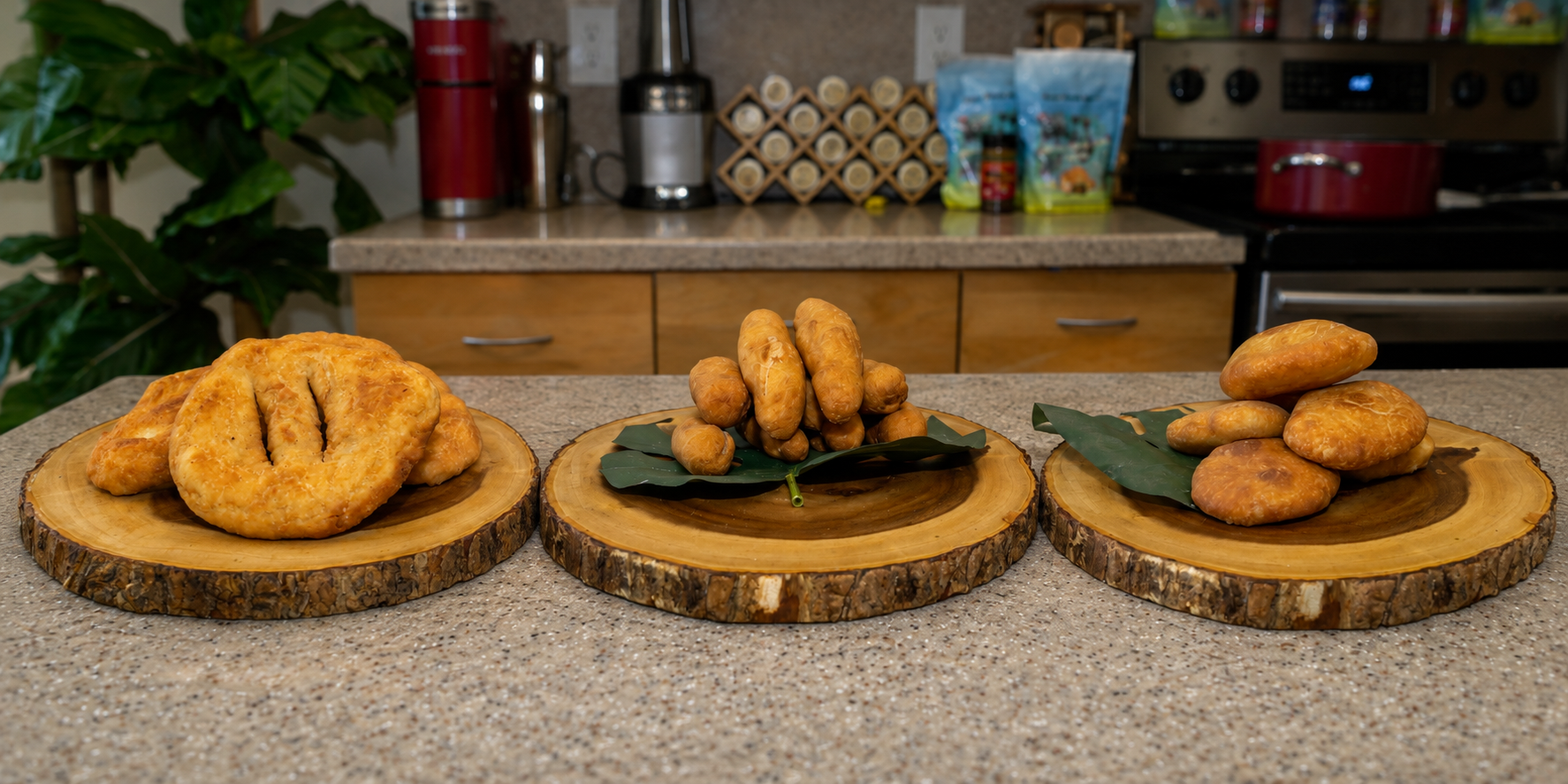
Jamaican Festival has a signature elongated shape and a lightly sweet flavor that sets it apart from many other Caribbean fried doughs.
Cornmeal is an important part of the Festival recipe, giving it a texture and character that you don’t get from a plain flour-based dough. Once fried, you’re looking for that beautiful golden exterior with a soft, fluffy center.
And then there are the pairings.
Festival is famously served with foods like jerk chicken, jerk pork, and fried fish. That slight sweetness works especially well alongside the bold, savory, spicy flavors of Jamaican cooking.
This is one of those foods where the shape, flavor, and what you serve it with all come together to tell you exactly where it belongs.
I’ve included my Festival recipe below so you can make this Jamaican favorite in your own kitchen.
Trinidad Fried Bake: Round, Puffy and Made to Be Filled
Then we travel to Trinidad and Tobago, where you find Fried Bake.
And yes, Fried Bake is fried.
The name can throw people off, especially if you’re coming from somewhere else in the Caribbean. But once you see one cooking, it makes perfect sense why it has become such a recognizable part of Trinidadian food.
Instead of the long shape of Festival, Fried Bake is rolled into a round piece of dough. When it hits the hot oil, it can puff up beautifully, creating a light, soft interior.
And that texture makes it incredibly versatile.
Fried Bake can be opened and filled with things like saltfish, smoked herring, or shark, and it is famously associated with the beloved Bake & Shark tradition.
That’s one of the biggest differences between these foods.
Festival is often the companion sitting beside your jerk or fish.
Fried Bake can become the bread that holds the meal together.
I’ve included my Trinidad Fried Bake recipe below so you can experience that difference for yourself.
Virgin Islands Johnnycake: The One That’s Personal to Me
Then we come home to the Virgin Islands Johnnycake.
This one is different for me because it isn’t simply another Caribbean food I’m comparing.
It’s part of my own food story.
Johnnycake is more than breakfast in the Virgin Islands. You can find it served with saltfish, used almost like a sandwich bread, or enjoyed fresh and hot on its own.
For many of us, it’s comfort food.
It’s also one of those foods that shows you how traditions evolve.
I talked about this in the episode when I brought up what I call the “Gucci link” style of Johnnycake. When I was growing up, I knew Johnnycake one way. Later, I started seeing this particular slit or cut made into the dough before frying, giving the finished Johnnycake a look that reminded people of a Gucci link.
That’s the funny thing about food.
Sometimes a technique has been around longer than you realize. Sometimes a younger generation puts its own spin on something. And sometimes you simply discover that the food you thought you knew has several versions depending on the family, generation, or island.
That’s how food evolves.
And that’s why I wanted Johnnycake to be part of this conversation.
I’ve already shared my Virgin Islands-style Johnnycake recipe here on ChefWinston.com, so if you want to make that version, you can [link to the existing Johnnycake recipe].
Festival vs. Bake vs. Johnnycake: What’s the Difference?
So let’s make this simple.
Jamaican Festival is elongated, lightly sweet, and made with cornmeal. It’s strongly associated with Jamaican dishes such as jerk chicken, jerk pork, and fried fish.
Trinidad Fried Bake is rounder and puffier, with a soft interior that makes it perfect for opening and filling. Think saltfish, smoked herring, shark, and the famous Bake & Shark tradition.
Virgin Islands Johnnycake is a fried bread with a deep cultural connection to the Virgin Islands. For me, it carries the added significance of the food I grew up with and watched older generations prepare.
They overlap.
But they aren’t interchangeable.
And that’s really the answer to the question I get asked so often.
Why Caribbean Food Can Look So Similar but Taste So Different
One of the things I love most about Caribbean cooking is how much creativity can come from simple ingredients.
You don’t need a complicated list of ingredients to create something memorable.
Sometimes it’s the technique.
Sometimes it’s the shape.
Sometimes it’s what you serve alongside it.
And sometimes it’s the memories attached to the food.
That’s why two islands can start with similar ingredients and end up with completely different foods.
The Caribbean isn’t one single kitchen.
Every island, community, family, and generation adds something to the story.
Festival, Bake, and Johnnycake are a perfect example.
Chef Winston’s Tip for Getting the Best Results
Here’s something important when you’re working with these kinds of doughs: don’t assume that because the foods are related, you should treat every dough the same way.
The resting time alone tells you that.
My Festival dough needs a relatively short rest before shaping and frying. The Fried Bake dough needs considerably more time to rest before it’s rolled and fried.
That difference matters.
You want the dough to be workable, and you want the finished bread to have the texture you’re looking for. So don’t rush through the resting stage just because you’re ready to get to the frying.
Give the dough the time the recipe calls for.
What Should You Serve With Festival, Bake, and Johnnycake?
The easiest way to decide which one you want is to think about what you’re serving alongside it.
For Festival, think bold Jamaican flavors: jerk chicken, jerk pork, fried fish, escovitch, and other savory dishes.
For Trinidad Fried Bake, think fillings. Saltfish, smoked herring, shark, butter, and cheese are just some of the ways to enjoy it.
For Virgin Islands Johnnycake, saltfish is a classic pairing, but it can also be enjoyed fresh and hot or used to hold a savory filling.
Three different foods.
Three different experiences.
And plenty of good reasons to make all three.
Same Caribbean Spirit, Different Identities
That’s what I want you to take away from this comparison.
Festival, Bake, and Johnnycake aren’t the same food.
They come from different traditions and have developed their own shapes, textures, techniques, and ways of being enjoyed.
But they also share something important.
They are all examples of Caribbean cooks taking simple ingredients and turning them into food with identity.
That’s the part of Caribbean cuisine I never get tired of.
The food doesn’t have to be complicated to have a story.
Sometimes, all it takes is flour, a little technique, and generations of people making something their own.
So whether you call it Festival, Bake, Johnnycake, fried dumpling, fried bread, or something completely different where you’re from, I want to hear about it.
What did your island call it?
And if you grew up in the Virgin Islands, tell me this too: did you grow up with the “Gucci link” style of Johnnycake, or is that something that came along later?
Drop your island, your generation, and the name you grew up calling it in the comments.
Because that’s how we keep these food stories going.
Bring your fork or bring your feelings. Either way, I’m bringing flavor.
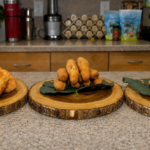
Festival vs Bake vs Johnny Cake
Ingredients
Festival Recipe
- 2 cups all-purpose flour
- ½ cup fine yellow cornmeal
- 2 tablespoons granulated sugar
- 2 teaspoons baking powder
- 1 teaspoon kosher salt
- 1 tablespoon unsalted butter melted
- ¾ cup whole milk
- ¼ –½ cup water as needed
- Vegetable oil for frying
Trinidad Bake (Fried Bake)
Makes 8 bakes
- 3 cups all-purpose flour
- 1 tablespoon baking powder
- 1 teaspoon kosher salt
- 1 tablespoon granulated sugar
- 2 tablespoons unsalted butter softened (or vegetable shortening)
- 1 cup warm water approximately
- Vegetable oil for frying
Instructions
Festival
Step 1: Mix the Dry Ingredients
In a large bowl, whisk together:
- Flour
- Cornmeal
- Sugar
- Baking powder
- Salt
Step 2: Add the Wet Ingredients
- Add the melted butter and milk.
- Gradually add water while mixing until a soft, smooth dough forms.
- The dough should be soft but not sticky.
Step 3: Rest the Dough
- Cover and let the dough rest for 15 minutes.
- This allows the flour to fully hydrate and helps create a lighter texture.
Step 4: Shape the Festival
- Divide the dough into 10–12 equal portions.
- Roll each piece into a log approximately:
- 4–5 inches long
- About 1 inch thick
- Traditional festivals have tapered ends with a slightly thicker center.
Step 5: Fry
- Heat vegetable oil to 350°F.
- Carefully place several festivals into the hot oil without overcrowding the pan.
- Fry for 8–10 minutes, turning occasionally, until evenly golden brown and cooked through.
- Transfer to a paper towel-lined plate to drain.
Trinidad Bake (Fried Bake)
Step 1: Mix the Dry Ingredients
In a large mixing bowl, whisk together:
- Flour
- Baking powder
- Salt
- Sugar
Step 2: Cut in the Butter
- Add the softened butter and work it into the flour using your fingertips until the mixture resembles coarse crumbs.
- This helps create a tender, flaky interior.
Step 3: Form the Dough
- Gradually add the warm water while mixing until a soft dough comes together.
- Knead for 5–7 minutes until the dough becomes smooth and elastic.
- It should be soft but not sticky.
Step 4: Rest
- Lightly oil the dough, cover with a towel or plastic wrap, and let it rest for 1 hour.
- Resting relaxes the gluten, making the dough easier to roll and helping it puff beautifully during frying.
Step 5: Divide and Roll
- Divide the dough into 8 equal portions.
- Roll each piece into a smooth ball.
- Let the dough balls rest for another 10 minutes.
- Flatten each ball into a circle about:
- 6 inches in diameter
- ¼ inch thick
- Avoid rolling them paper-thin.
Step 6: Fry
- Heat about 2 inches of vegetable oil to 350°F.
- Carefully place one bake into the hot oil.
- As it begins to puff, gently spoon hot oil over the top to encourage even inflation.
- Flip after about 1½–2 minutes.
- Continue frying until both sides are evenly golden brown.
- Drain on a wire rack or paper towels.
- Repeat with the remaining dough.
Video