Floribbean Rack of Lamb with Roasted Garlic Lime Butter Flavor Board
Rack of lamb recipe lovers, I have a question for you: would you cook a beautiful rack of lamb without putting a single grain of seasoning on it?
No salt.
No pepper.
No herbs.
Nothing.
For more than 30 years as a chef, I have cooked meat the way most of us were taught to cook it: season it, cook it, rest it, and serve it. So when I decided to take a beautiful Frenched rack of lamb and deliberately leave it completely unseasoned before cooking, I knew I was stepping outside my usual routine.
But that was the whole point.
This wasn’t about proving that traditional seasoning is wrong. It wasn’t about finding some magical new rule for cooking lamb. It was an experiment: What happens when you change when the flavor is introduced?
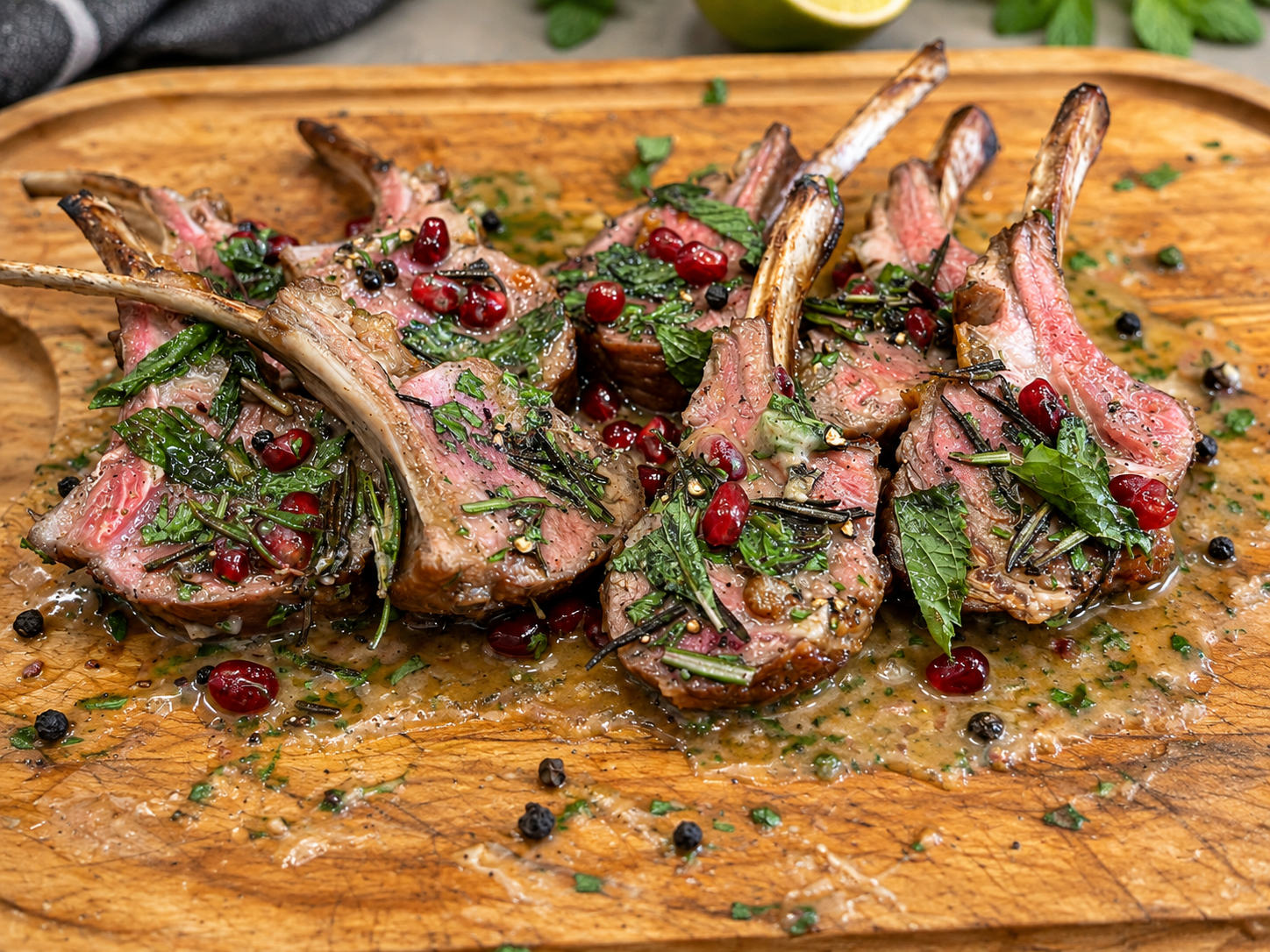
Instead of seasoning the lamb before it hits the pan, I built the flavor afterward with roasted garlic, lime butter, rosemary, flaky sea salt, freshly cracked black pepper, fresh mint, pomegranate and the natural juices released from the lamb.
The result created a completely different eating experience.
And that’s what makes this recipe more than another way to cook lamb.
Why I Tried This Rack of Lamb Recipe
I’ve been cooking professionally for more than three decades, and one thing you learn over that amount of time is that cooking is full of rules.
Some are important.
Some are traditions.
Some are techniques that have been passed down because they work.
But good cooks also have to know why they’re doing something.
The idea for this experiment came from seeing contemporary cooking content built around meat being cooked without traditional seasoning and then finished on a board containing butter, garlic, herbs and seasoning.
I wanted to take that basic question and put my own spin on it.
Could that concept work with a premium rack of lamb?
I wasn’t interested in simply copying somebody else’s recipe. I wanted to see what would happen if I applied my own cooking judgment, my own technique and my own flavor profile.
That meant taking a beautiful Frenched rack of lamb and resisting the urge to reach for the salt and pepper.
That was harder than it sounds.
When you’re standing in front of a beautiful piece of meat with a hot skillet waiting, seasoning it feels almost automatic. It’s muscle memory.
But this time, the seasoning stayed on the sidelines.
The lamb went into the pan completely unseasoned.
And that’s where the experiment really began.
What Makes This Rack of Lamb Different?
The biggest difference is simple:
The flavor comes last.
Instead of seasoning the lamb before cooking, the seasoning becomes part of a finishing sauce that coats the lamb after it has been sliced.
The rack is first seared in a screaming-hot skillet to build a beautiful crust. It then goes into the oven for a gentle finish. While the lamb cooks, the flavor board comes together.
Softened butter is combined with roasted garlic, lime zest and fresh lime juice. Rosemary is added to the board along with flaky sea salt and freshly cracked black pepper.
Then comes the part that makes this recipe especially interesting.
The hot lamb is placed directly onto the prepared flavor board.
As the butter begins to melt, the lamb’s released juices mingle with the garlic, herbs, lime butter, salt and pepper. Once the rack is sliced, each chop can be turned through that mixture so the cut surface picks up the finishing sauce.
Then I finish it with fresh mint and pomegranate.
You get richness from the butter and lamb, brightness from the lime and mint, savory depth from the roasted garlic and rosemary, and little bursts of sweetness and acidity from the pomegranate.
That’s the Floribbean side of this experiment.
The technique itself isn’t being presented as a traditional Caribbean technique. The Floribbean identity comes through the way I build the finishing flavor: bold, fresh, bright and layered.
Preparing a Frenched Rack of Lamb
Before we get to the cooking, let’s talk about the rack itself.
Rack of lamb is one of those cuts that can make a meal feel special before you’ve even taken the first bite. If you’re having guests over, planning a dinner party or simply want to put something impressive on the table, a Frenched rack of lamb has serious presentation value.
The recipe calls for approximately a 1½- to 2-pound Frenched rack of lamb.
If your rack isn’t already cleaned and Frenched, you’ll want to remove loose flaps, exposed silverskin and any hard exterior fat that isn’t likely to render.
But don’t go crazy trimming it.
One of the things I emphasized during this experiment was the importance of respecting the fat cap. The fat isn’t something you automatically need to remove. Some of it will render during cooking, helping develop flavor and protecting the meat.
The goal is to clean the rack without stripping away everything that makes the cut special.
Chef Winston’s Butcher’s Twine Trick
Here’s one of the little tricks I shared during the episode.
When chefs French the bones, they often scrape away the remaining meat and connective tissue with a knife. That works, but there’s another way to make the process quicker.
Take a piece of butcher’s twine and tie a firm knot around the exposed bone near the base. Pull the twine downward.
The remaining material can come away from the bone, leaving you with a cleaner French.
It’s a simple trick, but it’s exactly the kind of behind-the-scenes technique that can make a home cook feel more confident handling a premium cut.
Once the rack is cleaned, lightly score the fat cap.
The important word here is lightly.
You want to score the fat, not cut down into the meat. Those shallow cuts help the fat render while creating little spaces where the finishing flavors can interact with the surface later.
And remember the most important instruction of the entire recipe:
Do not season the lamb.
Making the Roasted Garlic Lime Butter
While the lamb is cooking, this is where we start building the flavor.
The roasted garlic lime butter is the foundation of the flavor board.
You’ll need softened unsalted butter, roasted garlic, lime zest and fresh lime juice.
Mash the roasted garlic until it’s soft and creamy, then combine it with the softened butter, lime zest and lime juice.
The lime brings acidity and freshness to the richness of the butter, while the roasted garlic gives the mixture a deeper, sweeter savory character.
Set the butter aside while the lamb cooks.
The butter doesn’t need to be complicated. In fact, that’s part of what makes this technique work.
You’re building layers from ingredients that complement lamb naturally, then allowing the heat and juices from the cooked meat to bring everything together.
Why I Sear the Lamb First
You may have noticed that reverse searing has become a popular technique for cooking meat.
It was considered for this episode too.
But once I looked closely at the actual rack of lamb I had in front of me, I decided it wasn’t the technique I wanted for this particular cut.
That’s an important lesson in cooking:
A technique should fit the ingredient.
Reverse searing can be useful, particularly with thicker cuts where precise control of internal doneness is important. But you don’t need to force every popular technique onto every piece of meat.
For this rack, I wanted to develop the crust first and then gently finish the interior in the oven.
So that’s exactly what I did.
Heat a heavy, oven-safe skillet over medium-high to high heat. Add enough neutral high-heat oil to lightly coat the pan.
Place the lamb fat-side down.
And then leave it alone.
This is where patience matters.
Let the lamb develop that deep golden-brown crust before moving it around unnecessarily. Rotate it as needed to brown the exposed surfaces.
And yes, we’re still not seasoning it.
No salt.
No pepper.
No herbs.
Just lamb, heat and the beginning of the crust.
Finishing the Rack in the Oven
Once the rack has developed that beautiful brown exterior, transfer it to a preheated 375°F oven.
Because this is a premium cut and rack thickness can vary, don’t rely solely on the clock.
Use an instant-read thermometer.
The recipe itself targets approximately 125°F in the thickest part before carryover cooking brings the lamb toward approximately 130–132°F for medium-rare.
There is an important food-safety distinction here.
The USDA recommends that lamb steaks, chops and roasts reach a minimum internal temperature of 145°F, followed by at least a three-minute rest.
So if you’re following Chef Winston’s medium-rare approach, understand that the recipe’s target is a culinary doneness preference, while the USDA’s 145°F recommendation is the food-safety standard.
Whichever doneness you choose, use a food thermometer rather than guessing. USDA guidance recommends placing the thermometer in the thickest portion while avoiding bone, fat and gristle.
The exact cooking time will depend on the size and thickness of your rack. That’s why temperature is a better guide than simply saying, “Cook it for X minutes.”
Building the Flavor Board
While the lamb is finishing in the oven, prepare your board.
Spread the roasted garlic lime butter across the center of a clean cutting or serving board.
Scatter the finely chopped fresh rosemary over the butter.
Then season the board with flaky sea salt and freshly cracked black pepper.
Think about what’s happening here.
If we were cooking the lamb traditionally, those seasonings would already be sitting on the meat.
Instead, they’re waiting on the board.
This is where the experiment starts to become more than just a gimmick. We’re deliberately changing the point at which those flavors meet the meat.
And we’re about to find out what that does to the final bite.
Let the Hot Lamb Meet the Flavor Board
When the lamb reaches the recipe’s target temperature, remove it from the oven and place it directly onto the prepared flavor board.
Let it sit briefly—about 60 to 90 seconds.
The heat from the lamb begins melting the butter. The roasted garlic and rosemary release their aromas. The lamb’s natural juices begin joining the mixture.
The recipe allows the lamb to carry over toward approximately 130–132°F for medium-rare, but again, use the USDA safety guidance above when determining the final temperature you are comfortable serving.
And now we get to the part that makes this recipe so satisfying to watch.
Slice the Lamb and Build the Sauce
Instead of treating the finishing mixture as a separate sauce served on the side, we’re going to let the lamb meet it directly.
Cut between the bones to create individual or double chops.
As the lamb is sliced, the released juices combine with the melted lime butter, roasted garlic, rosemary, salt and pepper on the board.
Now take each chop and gently turn or drag it through that mixture.
You’re coating the freshly cut surfaces with the finishing sauce.
This is the heart of the technique.
The flavor comes last.
You’re not trying to claim that the seasoning somehow travels back into the meat. The flavor is being deliberately introduced at the finishing stage, coating the freshly sliced lamb.
That distinction matters.
The Fresh Finish: Mint and Pomegranate
The dish isn’t finished yet.
Fresh mint goes on last.
Don’t chop it into tiny pieces. Tear the leaves and scatter them over the lamb.
Mint and lamb are natural partners, and here the fresh leaves provide a bright aromatic contrast to the richness of the butter and meat.
Then add the pomegranate arils.
Pomegranate brings color, but that’s not all it brings.
Those little seeds give you bursts of sweetness and acidity that cut through the richness of the dish.
Use them with some restraint. You don’t want every bite to taste like pomegranate. You want occasional pops of brightness that keep the lamb interesting.
If you’re following the full episode version, you can also finish the board with a drizzle of good olive oil and aged balsamic vinegar.
That gives the board another layer of acidity and turns the mixture into something that feels almost like a tableside culinary performance.
And honestly, that’s part of the fun.
How to Serve This Rack of Lamb
This rack of lamb is made for entertaining.
Rather than hiding the entire process in the kitchen, you can prepare the flavor board where your guests can see it.
Bring the hot lamb to the board.
Let them see the butter melt.
Slice the rack between the bones.
Drag the chops through the buttery lamb-juice mixture.
Add the mint and pomegranate.
Then serve.
It’s dinner and a little bit of culinary theater at the same time.
For a dinner party, serve the lamb alongside sides that don’t compete with the bright finishing flavors. Roasted vegetables, potatoes, grains or a fresh salad can all work depending on the occasion.
You can also serve the chops as part of a larger gathering, where guests can take individual pieces directly from the board.
Just remember that the lamb is the star.
The goal isn’t to bury a premium cut under a mountain of sauce or toppings. The butter, garlic, herbs, mint and pomegranate should enhance the lamb rather than overpower it.
Chef Winston’s Tips for Making This Recipe
Don’t Over-Trim the Fat Cap
The fat cap is part of what makes rack of lamb special.
Remove hard exterior fat and anything that won’t contribute to the finished dish, but don’t strip the rack bare.
You want enough fat to render and contribute to the cooking process.
Score Only the Fat
Use a sharp knife and make shallow cuts through the fat cap.
Don’t cut into the meat.
The purpose is to help the fat render while maintaining the integrity of the lamb underneath.
Use Temperature, Not Just Time
A rack of lamb can vary in size and thickness.
That’s why an instant-read thermometer is your best friend here.
For the recipe’s medium-rare target, Chef Winston works around 125°F before carryover cooking. For food safety, however, the USDA recommends lamb steaks, chops and roasts reach 145°F with at least a three-minute rest.
Don’t Drown the Lamb in Butter
This is important.
The flavor board is supposed to create a finishing sauce, not turn the lamb into a bowl of melted butter.
You want the butter, roasted garlic, herbs, seasoning and lamb juices to come together without overwhelming the meat.
Add the Mint at the End
Fresh mint is most effective when it stays fresh and aromatic.
Tear it over the lamb just before serving.
Be Careful With the Pomegranate
Pomegranate should give you occasional bursts of sweetness and acidity.
You don’t need to cover every inch of the lamb with it.
What About Reverse Searing?
This is one of the most interesting parts of the experiment.
Reverse searing is a legitimate cooking technique. It can be particularly useful when you’re looking for careful control over the interior temperature of thicker cuts.
But that doesn’t mean it belongs on every piece of meat.
When Chef Winston examined this particular rack, he decided the cut was better suited to a hard sear followed by an oven finish.
That decision is part of the bigger lesson behind the recipe.
Don’t cook according to a trend. Cook according to the ingredient in front of you.
A technique is a tool.
The skill comes from knowing when to use it.
The USDA also emphasizes using a thermometer rather than relying on appearance or timing alone when determining whether meat has reached a safe temperature.
So, Does Late Seasoning Actually Work?
Here’s where I want to be clear.
Would I say this technique replaces seasoning lamb before cooking?
No.
That’s not what this experiment was about.
When you season meat before cooking, those seasonings become part of the cooking process and crust. With this method, the seasoning stays in the finishing sauce and coats the freshly sliced lamb along with the butter, garlic, herbs and natural lamb juices.
That’s a different experience.
And that’s what made the experiment interesting.
After more than 30 years of cooking professionally, I’m still willing to try something that makes me uncomfortable.
Because that’s how we keep learning.
Food evolves.
Techniques evolve.
And sometimes you learn more by questioning a familiar process than by repeating it simply because that’s the way you’ve always done it.
That doesn’t mean abandoning tradition.
It means understanding the reason behind the tradition and knowing when another approach might be worth testing.
For this rack of lamb, I wouldn’t change a thing about the experiment.
The lamb developed a beautiful seared exterior. The roasted garlic lime butter brought richness. Rosemary added that familiar herbal connection to lamb. The mint lifted everything. The pomegranate gave us those bright little bursts of sweetness and acidity.
And because the seasoning was introduced at the end, every freshly sliced chop picked up that finishing mixture directly from the board.
That’s the experience.
Frequently Asked Questions
Can I season the lamb before cooking?
You can, but then you’re no longer making this particular late-seasoning experiment.
The defining idea of this recipe is that the rack goes into the pan completely unseasoned and receives its flavor from the finishing board.
Can I use a different cut of lamb?
The recipe was developed specifically around a Frenched rack of lamb. A different cut may require different cooking times and technique, so don’t assume the same temperature and timing will transfer directly.
Do I have to French the rack myself?
No. A butcher can French the rack for you, and many racks are sold already Frenched.
If you’re doing it yourself, Chef Winston’s butcher’s-twine trick can help clean the bones without repeatedly scraping them with a knife.
Can I use dried mint?
Fresh mint is strongly preferred for the finishing stage. The recipe uses it at the end specifically to preserve its fresh aroma.
Can I leave out the pomegranate?
Yes. The pomegranate adds brightness, sweetness and acidity, but the core finishing sauce is built around the roasted garlic lime butter, herbs, salt, pepper and lamb juices.
Can I make the garlic lime butter ahead of time?
Yes. Prepare it ahead and keep it refrigerated until you’re ready to cook. Bring it back toward a workable softened consistency before spreading it onto the board.
What temperature should lamb reach?
For food safety, the USDA recommends that lamb steaks, chops and roasts reach a minimum internal temperature of 145°F, followed by at least three minutes of rest.
Chef Winston’s recipe uses a lower temperature target for his preferred medium-rare presentation, so home cooks should understand the distinction between a chef’s preferred doneness and the USDA’s safety recommendation.
Why use a thermometer?
Because rack thickness varies.
Two racks can look similar but cook very differently. A thermometer gives you actual information about what’s happening inside the meat instead of asking you to guess.
USDA guidance recommends placing the thermometer in the thickest part of the meat while avoiding bone, fat and gristle.
The Lesson Behind This Rack of Lamb
This recipe started with a simple question:
What happens if you wait until the end to season the meat?
But it ended up reminding me of something bigger.
Good cooking isn’t about blindly following tradition.
It’s not about blindly following trends either.
It’s about understanding the ingredient, understanding the technique and knowing when to trust your culinary judgment.
That’s what I wanted to explore with this rack of lamb.
After more than 30 years of cooking professionally, I can still learn something new.
And that’s one of the things I love most about cooking.
There is always another technique to test, another ingredient combination to explore and another classic idea waiting for somebody to give it a different twist.
So make this rack of lamb for a dinner party. Put the flavor board right in the middle of the action. Let your guests watch the butter melt, the herbs release their aroma and the lamb get sliced into beautiful chops.
Then give everybody a fork.
Because at the end of the day, that’s where the experiment really matters:
the bite.
Would you season your lamb before cooking, or would you trust yourself to wait until the end?
Try it and let me know what you think.
And if you enjoyed this experiment, keep exploring the recipes and cooking techniques at ChefWinston.com.
Bring your fork or bring your feelings. Either way, I’m bringing flavor.
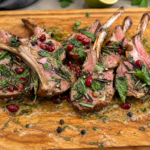
Floribbean Rack of Lamb with Roasted Garlic Lime Butter Flavor Board
Ingredients
For the Rack of Lamb
- 1 Frenched rack of lamb approximately 1½–2 pounds
- 1 –2 tablespoons neutral high-heat cooking oil for searing
- That's it. Do not season the lamb before cooking.
For the Roasted Garlic Lime Butter
- 6 tablespoons unsalted butter softened
- 4 cloves roasted garlic mashed
- Zest of 1 lime
- 1 –2 teaspoons fresh lime juice
For the Flavor Board
- Prepared Roasted Garlic Lime Butter
- 1 tablespoon fresh rosemary finely chopped
- ¾ teaspoon flaky sea salt plus more to taste
- ½ teaspoon freshly cracked black pepper plus more to taste
- 2 tablespoons fresh mint leaves torn
- 2 –3 tablespoons fresh pomegranate arils
Instructions
Prepare the Lamb
- Remove the lamb from the refrigerator and pat it thoroughly dry.
- Trim away any loose flaps, exposed silverskin or hard exterior fat that is unlikely to render, but do not aggressively remove the fat cap.
- If necessary, clean the exposed rib bones. Chef Winston's butcher trick is to wrap butcher's twine firmly around the bone and pull downward to help remove the remaining meat and connective tissue instead of repeatedly scraping the bones with a knife.
- Lightly score the fat cap in a shallow crosshatch pattern, being careful not to cut into the meat.
- Do not season the rack.
Make the Roasted Garlic Lime Butter
- Combine the softened butter, mashed roasted garlic, lime zest and lime juice.
- Mix until evenly incorporated.
- Set aside at room temperature while the lamb cooks.
Sear the Rack
- Preheat the oven to 375°F.
- Heat a heavy oven-safe skillet over medium-high to high heat until hot.
- Add enough high-heat oil to lightly coat the pan.
- Place the lamb fat-side down and sear until a deep golden-brown crust develops. Rotate the rack as necessary to brown the other exposed surfaces.
- Remember: still no seasoning.
- The goal here is crust development and color.
Finish in the Oven
- Transfer the rack to the preheated oven.
- Roast until the thickest part of the meat reaches approximately 125°F for medium-rare.
- Cooking time will vary depending on the size and thickness of the rack, so rely on internal temperature rather than the clock.
Build the Flavor Board
- While the lamb finishes, spread the Roasted Garlic Lime Butter across the center of a clean cutting board or serving board.
- Scatter the chopped rosemary over the butter.
- Season the board with the flaky sea salt and freshly cracked black pepper.
- This is where the seasoning that would traditionally have gone onto the raw lamb is waiting.
- Let the Lamb Meet the Flavor
- Remove the rack from the oven and place the hot lamb directly onto the prepared flavor board.
- Allow it to sit briefly—approximately 60–90 seconds—while the heat begins melting the butter and releasing the aroma of the rosemary and roasted garlic.
- The lamb should carry over toward approximately 130–132°F for medium-rare.
Slice and Coat
- Slice the rack between the bones into individual or double chops.
- As the lamb is sliced, the released juices will combine with the melted lime butter, roasted garlic, rosemary, salt and pepper on the board.
- Turn or gently drag each chop through the mixture so the cut surfaces pick up that finishing sauce.
This is the key to the technique:
- The flavor comes LAST.
Finish Fresh
- Tear the fresh mint over the lamb.
- Scatter the pomegranate arils across the board.
- Give the chops one final turn through the buttery herb-and-lamb-juice mixture and serve immediately.
Video
Notes
Would I say this technique replaces seasoning lamb before cooking?
No.
It creates a different eating experience.
When you season before cooking, the seasoning becomes part of the crust and cooking process. Here, the seasoning remains part of the finishing sauce, coating the freshly sliced meat along with the butter, roasted garlic, herbs and natural lamb juices.
That's what made this experiment interesting. After more than 30 years of cooking professionally, it's a reminder of something I still believe:
Good cooking isn't about following every trend. It's about understanding why a technique exists and knowing when it makes sense to use it. And sometimes the only way to find out is to cook it.
Bring your fork or bring your feelings. Either way, I'm bringing flavor.