Floribbean Seafood Lasagna
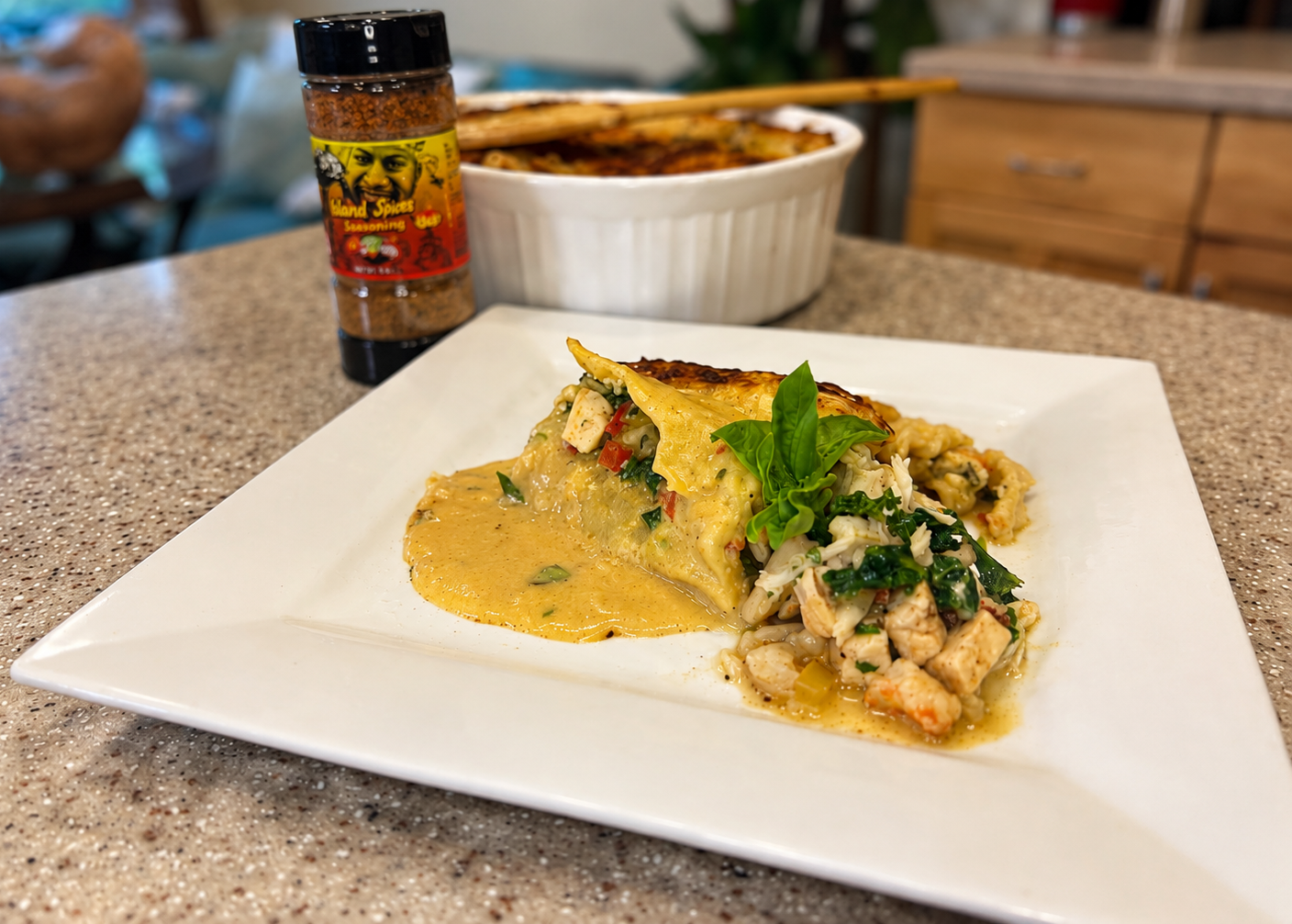
Floribbean Seafood Lasagna takes a familiar Italian classic and gives it the kind of bold, tropical personality that Chef Winston is known for. Instead of making an ordinary seafood lasagna, Chef Winston combines shrimp, scallops, crab, Florida mahi-mahi, vegetables, jerk seasoning, wine, rum, coconut milk, lime, fresh herbs, and plenty of cheese to create a dish that is truly Floribbean.
This recipe came from a request by one of Chef Winston’s followers, Janet in Georgia, who asked for a seafood lasagna. Chef Winston decided not to simply reproduce a traditional version. Instead, he took the idea and gave it his own Floribbean treatment—complete with individually rolled lasagna sheets, a creamy coconut-lime sauce, and a seafood filling loaded with flavor.
What Is Floribbean Seafood Lasagna?
Floribbean Seafood Lasagna is Chef Winston’s fusion of a familiar Italian comfort food with the flavors and ingredients associated with Florida and the Caribbean.
That fusion makes sense. VISIT FLORIDA’s explanation of Floribbean cuisine describes Floribbean cuisine as a blend of Caribbean and Latin American flavors, American and European traditions, Florida produce, and the state’s seafood specialties.
That is exactly the lane this lasagna occupies.
You still have lasagna noodles, cheese, a roux-based sauce, and the layered comfort-food appeal of lasagna. But Chef Winston changes the personality of the dish with seafood, jerk seasoning, coconut milk, lime, fresh herbs, rum, and wine.
It is not trying to be traditional Italian lasagna.
It is Floribbean Seafood Lasagna.
And that distinction is what makes it interesting.
Why This Floribbean Seafood Lasagna Stands Out
The seafood combination alone makes this dish special.
Chef Winston brings together shrimp, scallops, Florida mahi-mahi, and crab. Rather than relying on one type of seafood, each brings something different to the filling. The shrimp and scallops provide tender seafood bites, the mahi-mahi adds another meaty texture, and the crab brings a delicate sweetness that Chef Winston intentionally saves for the assembly.
The vegetables build another layer of flavor.
Onions are sautéed with red and yellow bell peppers before garlic and chopped kale join the mixture. The result is colorful even before the seafood goes into the pan.
Then Chef Winston brings in his mild jerk seasoning.
That is one of the ingredients that immediately pushes this lasagna away from the traditional Italian version and into Floribbean territory. He describes the seasoning as having complex flavors that take the seafood filling to another level.
If you’re exploring more of Chef Winston’s bold, Caribbean-inspired cooking, you can browse the full collection of recipes on ChefWinston.com.
The Seafood Filling Is Where the Flavor Starts
Chef Winston begins the filling by sautéing onions in olive oil, followed by red and yellow bell peppers. Once those vegetables start softening, garlic and chopped kale go into the pan.
Then comes the seafood.
The shrimp, mahi-mahi, and scallops are added to the vegetables and cooked briefly. Chef Winston is careful not to take the seafood too far because the lasagna will eventually finish cooking in the oven.
This is one of the places where restraint matters.
You don’t want to completely cook the seafood until it is firm and dry before it ever reaches the casserole dish. The initial sauté is about building flavor and getting the seafood started—not finishing the entire dish.
And then comes one of Chef Winston’s smartest decisions: the crab stays out of the main filling for now.
He explains that because the crab is so delicate, he wants its presence to remain visible when the lasagna rolls are assembled. Instead of disappearing into the filling, pieces of crab are added directly to each roll.
That means every serving gets a chance to show off the crab.
Wine and Rum Take the Seafood to Another Level
Once the seafood has been sautéed, Chef Winston adds white wine and rum.
This isn’t about making the lasagna taste like a cocktail. The purpose is to bring the flavors of the wine and rum into the seafood while allowing much of the alcohol to cook away.
Chef Winston specifically explains that if you’re cooking on a gas stove, the wine and rum should be added off the flame. He uses an induction cooktop in the video, where he can control the process without an open flame. He then allows the mixture to reduce briefly before incorporating it into the seafood.
If you enjoy recipes that use rum as a flavor-building ingredient, Chef Winston also has the Berry Citrus Red Sangria “Island Sunset”, another Floribbean-inspired recipe that brings wine, rum, and tropical ingredients together.
The Coconut-Lime Sauce Is the Secret Weapon
This is where the lasagna really separates itself from the ordinary.
Chef Winston creates a creamy sauce using low-sodium chicken stock, heavy cream, and coconut milk. The coconut milk is especially important because it brings a subtle tropical character to what would otherwise be a fairly traditional cream sauce.
To thicken the sauce, Chef Winston makes a roux.
If you’re unfamiliar with the technique, a roux is essentially a mixture of fat and flour cooked together and used to thicken sauces. Chef Winston explains that the roux can be cooked to different stages, but for this recipe he keeps it light rather than developing a dark roux.
He then slowly incorporates the hot liquid.
That technique matters because adding liquid gradually to a roux helps create a smooth sauce. The Exploratorium’s culinary science resources explain that flour starch absorbs liquid during this process, causing the sauce to thicken as the starches swell and gelatinize.
Chef Winston finishes his sauce with smoked paprika, fresh nutmeg, and lime juice.
The lime is particularly important.
The sauce has cream, butter, and coconut milk, so that small amount of citrus helps bring brightness and keeps the finished dish from feeling one-dimensional.
Chef Winston also demonstrates the classic culinary test for sauce consistency. When a sauce coats the back of a spoon and a clean line remains when you run your finger through it, the sauce has reached what chefs call nappe.
The Ricotta Filling Adds Creaminess and Freshness
Every good lasagna needs a component that ties the filling together, and Chef Winston’s ricotta mixture does exactly that.
He combines ricotta with an egg, mozzarella, Parmesan, fresh thyme, parsley, basil, and lime zest.
The lime zest is a small detail, but it matters.
Instead of adding more heaviness to an already rich dish, the citrus zest brings a fresh aroma and another layer of Floribbean character.
The fresh herbs also keep the cheese mixture lively. Thyme, parsley, and basil give the ricotta filling a fresh herbal quality that works beautifully with the seafood.
The Lasagna Rolls Change Everything
This is probably the most visually distinctive part of Chef Winston’s version.
Instead of simply laying the lasagna noodles flat and building traditional layers, he turns the noodles into individual rolls.
The cooked lasagna sheets are cooled and lightly tossed in oil so they don’t stick together. Chef Winston then spreads the ricotta mixture along the noodle before adding the seafood filling.
Then the crab goes in.
Each noodle is rolled tightly, with the seam placed underneath so the roll stays together.
Chef Winston describes the process as “roll and tuck,” because some of the filling may try to escape as the noodle is rolled. Simply tuck it back inside and keep rolling.
The rolls are then placed into a casserole dish that has already been coated with the creamy Floribbean sauce.
This approach gives the finished dish a completely different presentation from a standard layered lasagna.
Instead of cutting through one large stack of flat layers, you’re serving individual seafood-filled rolls surrounded by creamy sauce and melted cheese.
Cheese Makes the Finish
Once the lasagna rolls are arranged in the casserole dish, Chef Winston covers them with more of that creamy sauce.
Then comes the cheese.
He uses Monterey Jack, mozzarella, and Parmesan, creating a combination designed to melt, bubble, brown, and add that savory finishing layer that makes baked lasagna so comforting.
The casserole goes into a 375°F oven.
When it comes out, the top is golden, bubbly, and covered in melted cheese.
That is exactly what you want to see.
Chef Winston’s Tip: Don’t Overcook the Seafood
One of the biggest lessons from the video is to avoid cooking the seafood too aggressively during the initial sauté.
The shrimp, scallops, and mahi-mahi are started in the pan but don’t need to be cooked to the point of being completely finished before assembly. They’ll continue cooking when the lasagna goes into the oven.
This is particularly important in a seafood-heavy dish.
The USDA recommends cooking fish and shellfish to a safe internal temperature of 145°F, measured with a food thermometer.
So build flavor in the skillet, but let the oven finish the job.
Let the Lasagna Rest Before Serving
When this lasagna comes out of the oven, don’t immediately attack it with a knife.
Let it rest.
Chef Winston pauses before cutting into the finished dish so the lasagna can settle. That’s especially important with these rolls because you want the cheese, sauce, and filling to stay together when you lift each piece from the casserole dish.
Once you cut into it, you’ll see exactly why Chef Winston saved the crab for the assembly.
The seafood is visible inside the rolls, the cheese hugs the pasta, and the creamy sauce surrounds everything.
It is the kind of dish that makes you stop for a second before taking the first bite.
How to Serve Floribbean Seafood Lasagna
Chef Winston specifically calls this a good date-night meal, but it also works beautifully for a dinner party or special gathering.
Because this lasagna is rich and creamy, I would keep the sides fresh and uncomplicated.
A crisp green salad with a bright citrus dressing would give you some acidity and crunch alongside the creamy seafood rolls. Lightly dressed vegetables would work for the same reason.
For a larger Floribbean spread, you could serve this alongside other dishes from Chef Winston’s recipe collection and build an entire menu around the same Caribbean-meets-Florida flavor profile.
The important thing is not to overload the plate with another heavy side.
The lasagna already has plenty going on.
Why This Recipe Feels So Floribbean
What makes this recipe Floribbean isn’t one single ingredient.
It’s the combination.
The seafood reflects Florida’s coastal influence. The jerk seasoning brings Caribbean character. Coconut milk and lime introduce tropical notes. Fresh herbs brighten the dish. Rum and wine add another layer of flavor. And all of those ingredients are brought together through an Italian-inspired lasagna format.
That kind of culinary crossover is part of what makes Florida’s food culture so interesting. VISIT FLORIDA’s Floribbean cuisine guide specifically describes Floribbean food as a hybrid that combines Caribbean and Latin American flavors with American and European traditions and Florida’s seafood specialties.
Chef Winston takes that idea and puts it directly into a casserole dish.
The result is familiar enough to feel comforting but different enough to make you pay attention.
Make This Floribbean Seafood Lasagna for Your Next Gathering
There are plenty of seafood lasagna recipes out there.
This one isn’t trying to be just another one.
Chef Winston starts with the familiar foundation of lasagna and then takes it somewhere else. Shrimp, scallops, crab, mahi-mahi, jerk seasoning, coconut milk, lime, rum, wine, fresh herbs, ricotta, mozzarella, Monterey Jack, and Parmesan all have a role to play.
Then he changes the presentation by rolling the noodles individually and placing the seafood-filled rolls into a creamy sauce before baking everything until golden and bubbly.
That’s what makes Floribbean Seafood Lasagna worth making.
It’s bold without being gimmicky.
It’s creamy without relying on a heavy tomato sauce.
It’s seafood-forward without losing the comfort-food quality that makes lasagna so popular.
And most importantly, it reflects Chef Winston’s approach to Floribbean cooking: take something people know, respect the foundation, and give it a new personality.
So whether you’re making it for date night, a family dinner, or a gathering where you want to put something memorable on the table, this is one lasagna that won’t disappear into the background.
This one is a winner.
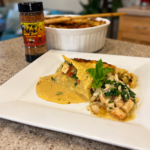
Floribbean Seafood Lasagana
Ingredients
For the Seafood Filling:
- 1 lb shrimp peeled and deveined, chopped
- 1/2 lb scallops chopped
- 1/2 lb crabmeat picked over for shells
- 1/2 cup mahi-mahi diced (optional for extra texture)
- 2 tbsp olive oil
- 1 small onion finely diced
- 1 red bell pepper diced
- 1 yellow bell pepper diced
- 2 garlic cloves minced
- 1/4 cup dry white wine
- 1/4 cup chopped fresh cilantro
- 1/4 cup chopped fresh parsley
- 1 tsp paprika
- 1 tsp Old Bay seasoning
- Salt and pepper to taste
For the Sauce:
- 4 tbsp unsalted butter
- 4 tbsp all-purpose flour
- 2 cups low-sodium chicken broth
- 1/2 cup heavy cream
- 1/2 cup coconut milk
- 1/4 cup lime juice
- 1/4 tsp nutmeg
- 1/2 tsp smoked paprika
- 1/2 tsp turmeric for color
- Salt to taste
For the Ricotta Mixture:
- 2 cups ricotta cheese
- 1 egg
- 1/2 cup shredded mozzarella cheese
- 1/4 cup grated Parmesan cheese
- 1/2 cup chopped spinach
- Zest of 1 lime
- 1 tbsp chopped fresh thyme
For Assembly:
- 12 lasagna noodles cooked and drained
- 2 cups shredded mozzarella cheese
- 1 cup shredded Monterey Jack cheese
- 1/2 cup grated Parmesan cheese
- Fresh cilantro for garnish
Instructions
Prepare the Seafood Filling:
- Heat olive oil in a large skillet over medium heat. Sauté onion, red bell pepper, and yellow bell
- pepper until softened (about 3 minutes).
- Add garlic and cook for another minute until fragrant.
- Stir in shrimp, scallops, and mahi-mahi, cooking until opaque (2-3 minutes).
- Add crabmeat, white wine, paprika, Old Bay seasoning, salt, and pepper. Cook for 1-2 minutes.
- Remove from heat and stir in fresh cilantro and parsley. Set aside.
Make the Tropical Sauce:
- In a medium saucepan, melt butter over medium heat. Stir in flour and cook for 1-2 minutes to form a roux.
- Slowly whisk in chicken broth, heavy cream, and coconut milk. Bring to a simmer, stirring constantly.
- Add lime juice, nutmeg, smoked paprika, turmeric, and salt. Simmer until thickened (5-7 minutes).
Prepare the Ricotta Mixture:
- In a bowl, combine ricotta cheese, egg, mozzarella, Parmesan, lime zest, spinch, and thyme.
- Mix until smooth.
Assemble the Lasagna:
- Preheat your oven to 375°F (190°C).
- Spread a thin layer of the tropical sauce on the bottom of a 9x13-inch baking dish.
- Layer 3-4 lasagna noodles over the sauce.
- Spread a layer of ricotta mixture, followed by the seafood filling. Spoon tropical sauce over the seafood.
- Sprinkle a mix of mozzarella and Monterey Jack cheeses. Repeat layers until all ingredients are used, finishing with cheese on top.
Bake the Lasagna:
- Cover the dish with foil and bake for 30 minutes. Remove foil and bake for an additional 15-20 minutes, or until the top is bubbly and golden brown.
Garnish and Serve:
- Let the lasagna rest for 10 minutes before slicing.
- Garnish with diced mango and fresh cilantro for a Floribbean flair.